


August 20, 2026
How to Define Sales Leads and Win More Deals
So, what exactly is a sales lead?
Forget the dry dictionary definitions for a moment. Think of a sales lead as a breadcrumb trail. It’s a clue—a sign that someone out there might be interested in what you have to offer. Without a steady stream of these clues, your business growth grinds to a halt.
At its core, a sales lead is a potential customer who has given you their contact information and signaled some level of interest. Maybe they downloaded your latest ebook, signed up for a webinar, or just followed your company on social media. That first little action is the handshake that opens the door to a real conversation.
To really get a handle on this, you need to know how to find these leads in the first place, which is all about mastering best practices for lead generation. This process is the lifeblood of any healthy sales pipeline.
The Anatomy of a Sales Lead
To help you move beyond just a name in a spreadsheet, let's break down what really makes up a sales lead. The table below outlines the three core components that turn a random contact into a genuine opportunity.
| Component | Description | Example |
|---|---|---|
| Interest | The initial spark of curiosity. The person has taken an action that shows they're paying attention. | Visiting your pricing page multiple times in one week. |
| Information | The crucial contact details you need to start a conversation. | Providing an email address to download a case study. |
| Potential | The "fit." Their profile aligns with the kind of customer you're looking for. | A Marketing Manager at a 50-person tech company. |
Seeing a lead through this lens helps you spot the difference between a dead end and a potential long-term customer.
A lead isn't just a contact; it's a possibility. It's an individual or company that has raised its hand, however slightly, signaling that they might have a problem your business can solve. Your job is to find out if that possibility is a reality.
Decoding the Different Types of Sales Leads
Not all leads are created equal. This is one of the first things you learn in sales, and it’s critical for making sure your marketing and sales teams are actually working together, not against each other.
Think of it like this: treating every lead the same is like a chef using the same recipe for every dish. You'd end up with a mess. Instead, you have to tailor your approach based on how ready someone is to buy. Understanding the difference is the key to avoiding wasted effort and capitalizing on real opportunities.
The most important distinction you'll need to make is between a Marketing Qualified Lead (MQL) and a Sales Qualified Lead (SQL).
From Initial Interest to Purchase Intent
Imagine someone walking into a bookstore. An MQL is the person browsing different sections, picking up a few books, and showing general curiosity. They're clearly interested in something, but their intent to buy isn't clear yet. They've engaged, but they aren't ready for a hard sell.
An SQL, on the other hand, is the person who walks straight to the counter and asks for a specific book. Their action signals a clear and immediate need. This shift from curiosity to intent is the most important moment in a lead's journey.
A Marketing Qualified Lead (MQL) is someone who has interacted with your marketing but isn't quite ready for a sales call. They've shown more interest than the average person on your email list, but they haven't raised their hand to talk to a salesperson.
- Common MQL Actions: Downloading an ebook, repeatedly visiting your pricing page, or signing up for a webinar.
A Sales Qualified Lead (SQL) is a lead your sales team has personally vetted and confirmed is ready for a direct follow-up. They meet specific criteria that signal they're a great fit and have a high chance of becoming a customer. To get better at identifying these ideal fits, check out our guide on how to create buyer personas.
The handoff from MQL to SQL is where a lot of companies drop the ball. Research shows that companies with strong sales and marketing alignment see up to a 20% annual growth rate. Those with poor alignment? Their revenue often declines.
This flow chart breaks down how all the pieces fit together, from that first spark of interest to becoming a valuable customer.
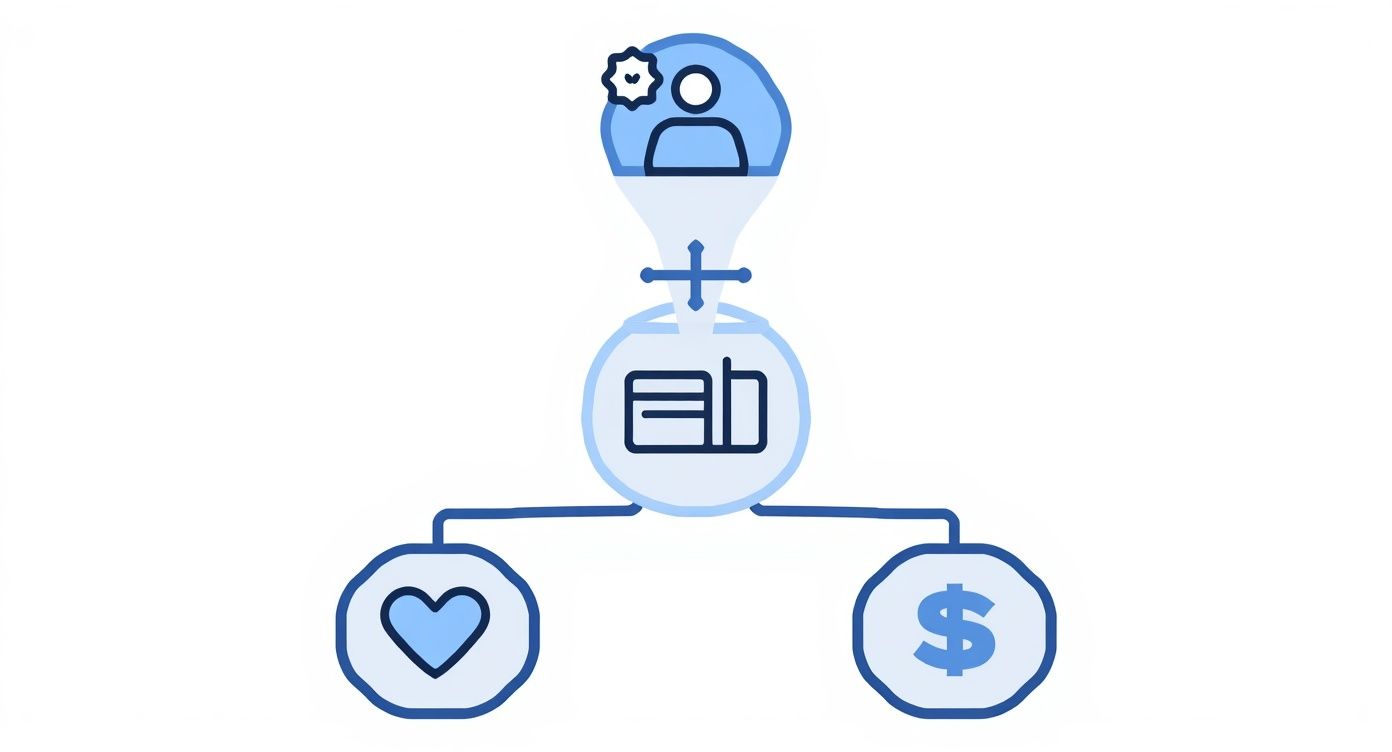
As you can see, a lead isn't just a name and an email. It’s a combination of interest, information, and potential. Knowing where each person falls on this spectrum helps you focus your time and energy where it will count the most.
How to Qualify Leads That Actually Convert
So you’ve got a long list of contacts. Great. But how do you turn that list into a pipeline of genuine opportunities? The answer is lead qualification. This is your filtering process—the system you use to figure out which leads are actually worth your time and which are just noise.
Without a solid qualification process, your sales team is basically flying blind, wasting precious hours chasing dead ends.
Think of it like panning for gold. You scoop up a pan full of dirt, rocks, and sediment. You don’t waste time inspecting every single pebble, right? Of course not. You use a specific sifting process to let the worthless stuff fall away, leaving only the valuable nuggets behind. That’s exactly what lead qualification does for your business.
A simple yet powerful framework to get started is BANT. It was originally developed by IBM, and its staying power comes from its simplicity. It’s an easy-to-remember acronym that helps you cover the most critical questions right away.
The BANT Framework Explained
BANT stands for Budget, Authority, Need, and Timeline. It gives your team a structured way to ask the right questions and quickly gauge whether a lead has real potential. It’s your cheat sheet for identifying someone who’s ready for a serious conversation.
-
Budget: Can they actually afford what you're selling? This is the first and most important hurdle. If there's no budget, there's no deal, no matter how much they love your product.
-
Authority: Are you talking to the person who can actually say "yes"? A contact might be enthusiastic, but if they don’t have the power to sign off on a purchase, you're not talking to the real decision-maker.
-
Need: Do they have a clear problem that your solution solves? A genuine need is the engine of any sale. Without it, there's no urgency and no reason for them to act.
-
Timeline: When are they looking to buy? A lead aiming to make a decision this quarter is a hot prospect. Someone who is "just looking" for next year is a much lower priority.
By consistently applying a framework like BANT, you ensure that your sales team focuses its energy where it matters most: on prospects who are not just interested, but are also willing and able to become customers.
For example, asking, "What does your timeline for implementation look like?" is a soft way to gauge their urgency. Similarly, a question like, "Who else on your team will be involved in this decision?" helps you map out their internal buying process and find the key players.
This structured approach is non-negotiable for any growing business. If you want to dive deeper into identifying high-potential prospects, you can explore more details on how to qualify sales leads and build a truly effective system. By focusing on the right leads, you don’t just boost efficiency—you dramatically increase your chances of closing deals.
Using Lead Scoring to Prioritize Your Efforts
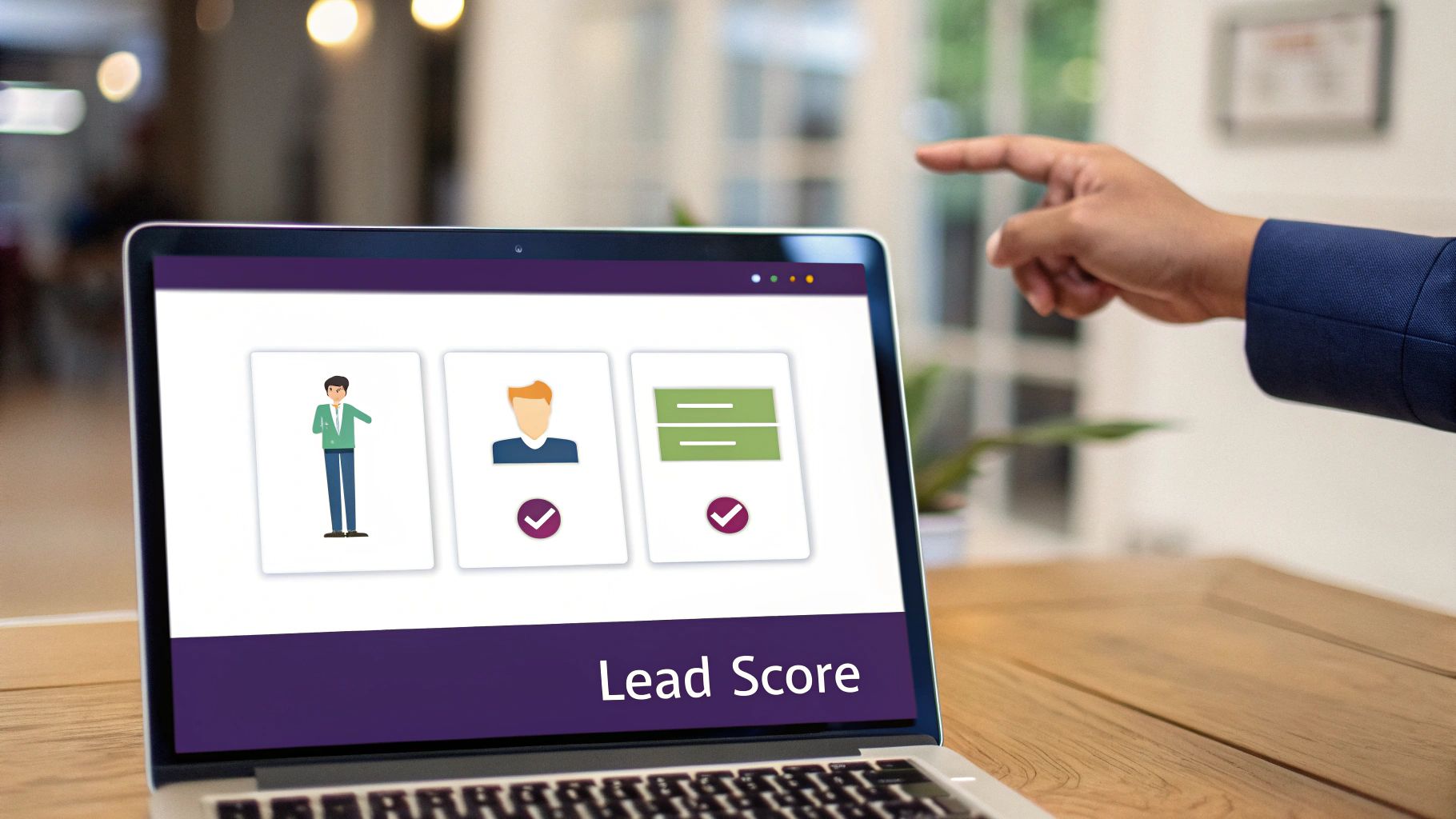
Knowing how to qualify leads is step one. Knowing which ones to call first is where the real magic happens. This is where lead scoring comes in, acting as your secret weapon for sales efficiency.
Think of it like a credit score for each prospect. It’s a simple, methodical way to rank every lead based on their likelihood to buy, letting you ditch the guesswork and focus your team’s precious time on the opportunities that are heating up.
You assign points for specific traits and actions, creating a clear hierarchy from "just browsing" to "ready to sign." It’s all about understanding a lead's value in real-time.
How Lead Scoring Works
At its core, the process is pretty straightforward. You award points based on two main categories: how well they fit your ideal customer profile and how much they’re interacting with you. This dual focus is critical—it makes sure you're chasing leads who are not only the right fit but are also actively showing interest.
-
Demographic Scoring: This is all about the "who." It’s based on the explicit information a lead gives you. You might award points if their job title is "Director" or their company falls into your sweet spot of 50-200 employees. These are the hard facts.
-
Behavioral Scoring: This is about the "what." It reflects how they engage with your brand. Simple actions like opening an email might get a few points, but high-intent behaviors—like visiting your pricing page three times or downloading a detailed case study—earn a lot more.
The logic is simple, but the impact is huge.
A lead with a score of 85 who just spent ten minutes on your pricing page is a red-hot opportunity. They should be at the top of your call list. A lead with a score of 30 who only downloaded a general ebook six months ago? They can wait.
For small businesses, this doesn't need to be a massive, complicated system right out of the gate. You can start with a basic spreadsheet to get the hang of it.
Below is a quick look at what a simple model might look like.
Example Lead Scoring Model
This table shows how you could assign points to different attributes and actions to start building your own scoring system.
| Attribute/Action | Points Awarded | Rationale |
|---|---|---|
| Job Title: Director/VP | +15 | Indicates decision-making authority. |
| Company Size: 50-200 | +10 | Fits the Ideal Customer Profile (ICP). |
| Industry: SaaS/Tech | +5 | Aligns with your target market. |
| Visited Pricing Page | +20 | A strong signal of buying intent. |
| Requested a Demo | +30 | The highest-intent action, showing active interest in your product. |
| Opened Email | +1 | Low-level engagement, keeps them on the radar. |
| Unsubscribed from Email | -25 | A clear signal they are no longer interested; reduces their priority. |
This is just a starting point, of course. The key is to refine these values over time based on which leads actually turn into customers.
As you grow, you'll likely want to explore platforms that can automate this for you. Getting a handle on marketing automation for small business will help you choose the right tools to manage and scale your lead scoring effectively.
Navigating B2B vs. B2C Lead Generation
The path from a curious browser to a paying customer looks completely different depending on who you’re selling to. Trying to use the same strategy for both business-to-business (B2B) and business-to-consumer (B2C) leads is a recipe for frustration. You need a different mindset for each.
Think of it this way: selling a complex CRM software to a company is a B2B sale. Your "lead" isn't one person—it's an entire committee. You have to win over the project manager, their department head, and probably someone from finance who holds the purse strings. The conversation revolves around logic, return on investment (ROI), and solving long-term operational problems.
Now, contrast that with a B2C sale, which is more like selling a new pair of sneakers to someone. The decision is usually quick, driven by emotion, a personal want, or the appeal of the brand. The lead is just one person who can pull out their credit card and buy on the spot.
Key Differences in the Sales Cycle
The biggest split between the two is the timeline. B2B sales cycles are notoriously long—often stretching over several months. Why? Because getting multiple stakeholders, budget approvals, and legal sign-offs all aligned takes time and effort.
B2C leads, on the other hand, are individuals who can make their own purchasing decisions almost instantly. The entire journey from seeing an ad to checkout can happen in a matter of minutes.
Because of this fundamental difference, your entire approach has to change.
B2B messaging needs to be built on a foundation of data, efficiency, and ROI. For B2C, your message should connect with personal desires, immediate benefits, and satisfaction. Getting this wrong is one of the most common reasons lead generation campaigns fall flat.
Mastering your approach to B2B sales leads is its own specialized skill. For a deeper dive, check out our detailed guide on what B2B lead generation entails.
Proven Best Practices for Lead Conversion
Alright, you’ve identified a qualified lead. They're a good fit, they're interested, and the ball is officially in your court. What happens next is what separates a closed deal from a missed opportunity. The clock is ticking.
The single biggest factor? Speed-to-lead. Think about it—when someone fills out a form, they're actively looking for a solution right now. Responding within five minutes versus thirty can be the difference between having a meaningful conversation and getting ghosted. In a crowded market, the first person to call often wins.
Create a Persistent Follow-Up Plan
Very few sales happen after a single touchpoint. That’s just not how it works. You need a structured, persistent follow-up plan to stay on their radar without being annoying. This means using a mix of channels to meet them where they're at.
- Email Automation: Set up a short sequence of 3-5 automated emails. Don’t just ask for a meeting. Offer value—share a relevant case study, a link to a helpful article, or an invite to a webinar.
- Phone Calls: For your most promising leads, nothing beats a personal phone call. Try calling at different times of the day to boost your chances of actually connecting.
- Social Media: Engage with your lead on professional networks like LinkedIn. A thoughtful comment on one of their posts is a fantastic, low-pressure way to build rapport.
Remember, persistence is not the same as being pushy. Every single interaction should give them something valuable and show off your expertise. The goal is to become a helpful resource, not just another salesperson. That’s how you build the trust needed to move the deal forward.
Personalization is your secret weapon here. Mention the specific guide they downloaded or a comment they made during a webinar. These small details show you've done your homework and see them as a person, not just another entry in your CRM.
A Few Common Questions We Hear About Sales Leads
Even with a solid plan, a few questions always pop up when teams are dialing in their lead generation process. Here are some quick answers to the things we get asked most often.
What’s the Real Difference Between a Lead and a Prospect?
Think of it this way: a lead is just a name and contact info. It's someone who might be interested, but you haven't confirmed anything yet. They're at the very top of the funnel.
A prospect, on the other hand, is a lead you've actually talked to and qualified. You've confirmed they fit your ideal customer profile, have a genuine need for what you offer, and have the authority to make a decision. It’s the moment a "maybe" turns into a "strong possibility."
How Many Times Should You Actually Follow Up with a Lead?
There's no magic number here, but giving up too early is a classic mistake. Most data suggests it takes an average of 6 to 8 touchpoints just to get a meaningful conversation started.
The trick is to make every single follow-up valuable. Ditch the generic "just checking in" emails. Instead, share a helpful resource, a relevant case study, or a new insight. That’s how you stay on their radar without being annoying.
Is It a Good Idea to Just Buy a List of Sales Leads?
Honestly? No. We strongly recommend against it.
Buying lists is like throwing spaghetti at the wall to see what sticks—it's messy and rarely works. These people have never heard of you, so conversion rates are almost always abysmal. Even worse, it can get your email domain flagged as spam, which torpedoes your entire outreach effort.
Building your own list of leads through genuine, organic marketing is a much better investment. It takes more work upfront, but the relationships and results are infinitely better in the long run.
Ready to turn your lead generation strategy into a powerful growth engine? The team at Frozen Crow Inc. provides the marketing expertise and IT services to help you attract, qualify, and convert more customers. Start with a free marketing audit today.


