


August 20, 2026
A Guide to Digital Transformation for Small Business
Let’s be honest, "digital transformation" sounds like a buzzword cooked up for Fortune 500 companies, not for a small business owner juggling a dozen things at once. But when you cut through the jargon, the idea is pretty simple.
It’s all about upgrading your company's engine to compete in today's world. This isn't about chasing every new tech gadget. It's a strategic move to use technology to work smarter, connect with customers on a deeper level, and finally start making decisions based on data, not just gut feelings.
What Digital Transformation Really Means
Think of it this way: you have a classic car. It looks great, but under the hood, it has an old, clunky motor. Digital transformation is like swapping that motor for a modern, high-performance one. The car still looks like yours, but now it runs faster, more reliably, and way more efficiently.
For a small business, this means getting past the basics of a simple website and a Facebook page. It’s about fundamentally rethinking how you operate and deliver value to your customers. The real goal is to build a business that’s more resilient, customer-obsessed, and ready for whatever comes next.
The Small Business Advantage
Here’s the thing—as a small, nimble business, you’re actually in the perfect spot to make these changes. You don't have to cut through layers of corporate red tape or deal with massive, outdated systems that big companies are stuck with. That agility is your secret weapon.
In fact, studies have shown that smaller businesses (with 100 or fewer employees) are 2.7 times more successful in their transformation efforts than huge enterprises with over 50,000 employees. Your ability to pivot and adapt quickly is your single greatest asset. You can find more details on how small businesses are crushing it in these digital adoption statistics from cflowapps.com.
A true digital transformation rethinks the entire business model—from customer engagement to internal workflows—by putting technology at its center. It’s a mindset shift, not just a tech upgrade.
From Old School to New School
To really see what this looks like in practice, let's compare how everyday tasks change. This isn't just about doing the same old things a bit faster; it's about finding entirely new and better ways of working.
The table below breaks down the shift from a traditional approach to a digitally transformed one across a few key areas of your business.
Traditional vs Digitally Transformed Business Operations
| Business Area | Traditional Approach | Digitally Transformed Approach |
|---|---|---|
| Customer Service | Phone calls and in-person support during business hours. | 24/7 support via chatbots, email automation, and a self-service knowledge base. |
| Sales Process | Manual lead tracking using spreadsheets and paper notes. | Automated lead capture and follow-up using a Customer Relationship Management (CRM) system. |
| Marketing | Print ads, local flyers, and word-of-mouth referrals. | Targeted social media ads, email marketing campaigns, and SEO to attract online customers. |
| Inventory Management | Manual stock counts and handwritten order forms. | Real-time inventory tracking with automated reorder alerts synced with sales data. |
| Payments | Cash, checks, or a basic credit card terminal. | Integrated online payment gateways, mobile payments, and automated invoicing. |
As you can see, the change is dramatic. It moves your business from being reactive and manual to proactive and automated, freeing you up to focus on what really matters: growing your company.
The Real-World Benefits of Going Digital
Let's get one thing straight: "going digital" isn't about collecting fancy software or chasing the latest tech buzzword. It's about getting real, measurable results for your business. When you start weaving the right technology into your day-to-day operations, you stop just getting by and start building a smarter, more profitable, and more durable company.
These aren't fuzzy, abstract concepts. We're talking about tangible gains that give you back more time, create happier customers, and fatten up your bottom line. Let's look at the four biggest wins you can expect when you make the shift.
Boost Your Operational Efficiency
One of the first things you'll notice is how much time you get back. Think about all the little, repetitive tasks that eat up your week—manually creating invoices, playing phone tag to schedule appointments, or digging through emails to find customer info. These are the necessary evils that pull you away from the work that actually makes you money.
Digital tools can act like a tireless extra employee, handling all that grunt work for you. For instance:
- Automated Invoicing: Good accounting software can fire off invoices, send reminders for late payments, and keep your expenses organized without you lifting a finger. That's hours back in your week, right there.
- Smart Scheduling: An online booking system lets customers pick a time that works for them, which means no more back-and-forth emails. It's simple, clean, and efficient.
- Project Management: Instead of constant check-in meetings, a solid project management tool keeps the whole team on the same page, tracking progress and making sure deadlines are hit.
When you automate this stuff, your team is free to focus on what humans do best: building relationships, thinking strategically, and coming up with the next big idea.
Deepen Customer Relationships
In a world full of noise, the one thing that truly sets you apart is the customer experience you provide. Digital tools are a game-changer here, making it easier than ever to connect with your audience on a personal level. The perfect example is a Customer Relationship Management (CRM) system.
Forget trying to remember details from scattered notes or old emails. A CRM gives you a single, organized place for every customer interaction. You can see their purchase history, how they like to be contacted, and any support tickets they've had. This is how you deliver that thoughtful, personal service that turns a one-time buyer into a raving fan.
Using customer data lets you ditch the generic, one-size-fits-all approach. You can start sending personalized offers and messages that make your customers feel like you actually get them. That’s how you build a real community around your brand.
Make Smarter Business Decisions
Are you running your business on gut feelings? Most of us are, at least some of the time. Digital transformation changes that by putting real data in your hands, turning guesswork into a calculated strategy. Even simple analytics tools can give you a crystal-clear picture of what's happening.
You can stop wondering and start knowing the answers to critical questions:
- Which products are flying off the shelves? Sales data tells you exactly what to reorder.
- Where are your best customers finding you? Marketing analytics show you which channels are actually worth your money.
- When are your busiest hours? Point-of-sale data can help you schedule staff perfectly.
When you have this kind of information, you can put your money and effort where they'll have the biggest impact, spot opportunities before anyone else, and change course quickly if something isn't working.
Expand Your Market Reach
Finally, a solid digital footprint shatters geographical limits. Suddenly, your potential market isn't just your neighborhood; it's anywhere you can ship to. An e-commerce website, some targeted social media ads, and good old-fashioned search engine optimization can connect you with customers you'd never have reached otherwise.
In fact, research shows that businesses that truly embrace a digital strategy have seen a 2x to 5x increase in sales and leads. Why? Because they can target the right people across multiple channels. You can dig into these digital transformation growth statistics on thebusinesslegacy.com. This isn't just about keeping up with the competition—it's about building a business that can grow and adapt, no matter what the future holds.
Your Practical Digital Transformation Roadmap
Kicking off a digital transformation for your small business can feel like planning a cross-country road trip without a map. You know where you want to go—a more efficient, profitable, and future-ready company—but the route looks incredibly complex. Let's break that journey down into five manageable stages, turning an overwhelming idea into a clear, step-by-step plan of action.
Think of this less as a rigid set of rules and more as a flexible guide. Each step builds on the last, helping you make thoughtful changes that deliver real value without breaking the bank or blowing up your entire operation. It's time to start the engine.
The diagram below shows how each step flows into the next. It starts with internal efficiency, leads to happier customers, and ultimately fuels data-driven growth.
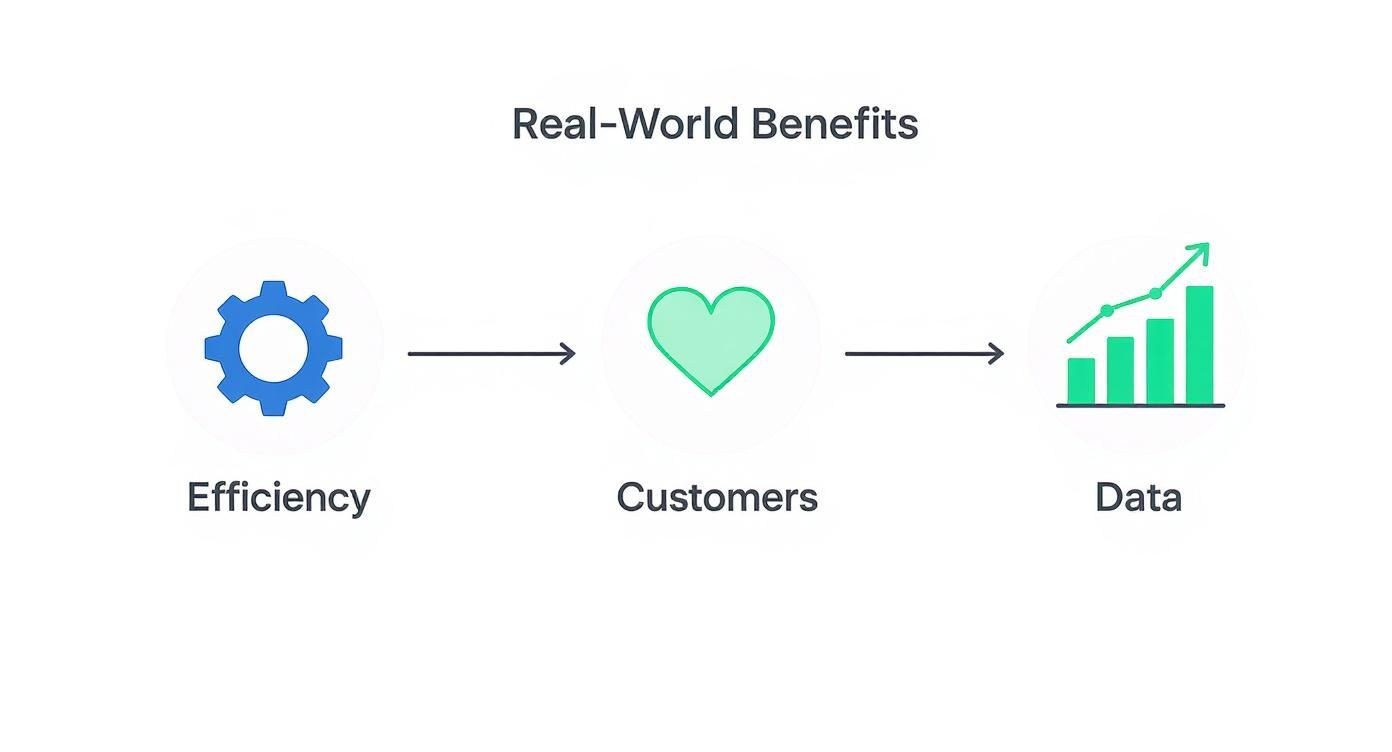
You can see the clear line from fixing internal processes (efficiency) to improving external results (customer satisfaction) and gaining a strategic edge (data insights). It’s all connected.
Stage 1: Assess Your Current Operations
Before you can move an inch, you need an honest look at where you're starting from. This assessment is all about finding the friction in your daily grind—the bottlenecks, the time-wasters, and the manual tasks that are holding you back. It’s like a mechanic diagnosing an engine before even thinking about ordering parts.
Start by asking some pointed questions about different parts of your business:
- Customer Interaction: How long does it take you to get back to a customer? Is your follow-up process consistent, or does it depend on who's working that day?
- Sales Process: Are you still tracking leads in a messy spreadsheet? How much time are you wasting on admin instead of actually selling?
- Internal Workflows: Where do handoffs between team members get clunky or dropped? What tasks force people to enter the same data twice?
Get your team involved. They're on the front lines and know exactly where the hang-ups are. Their feedback is gold for pinpointing the biggest pain points that technology can actually solve.
Stage 2: Define Clear and Achievable Goals
Okay, you've identified the problems. Now you can set specific, measurable goals to fix them. Vague ambitions like "get more digital" are useless. You need to tie your objectives directly to the headaches you uncovered in your assessment. This makes every action purposeful.
The best goals are SMART: Specific, Measurable, Achievable, Relevant, and Time-bound.
- Weak Goal: "We want to improve our marketing."
- SMART Goal: "We will implement an email marketing tool to increase repeat customer purchases by 15% within the next six months."
This kind of clarity turns "digital transformation" from a fuzzy buzzword into a concrete project with a real finish line. It also makes it a whole lot easier to see if you're getting a return on your investment later.
Stage 3: Choose the Right Technology Stack
This is where a lot of small businesses get analysis paralysis, fearing huge costs and crazy-complex software. The secret is to start small and pick tools that solve your specific problems without adding a bunch of features you'll never use. Your "tech stack" is just the collection of software that helps you run the business.
A solid online presence is ground zero for any digital effort. You can start by exploring the best website builders for small business to find a platform that fits your needs and budget.
Key Insight: The best tech for your business isn't the fanciest or most expensive. It's the one your team will actually use every day because it genuinely makes their jobs easier.
Think in categories and look for user-friendly, affordable options. The table below outlines a few essential areas to get you started.
Essential Tech Stack for Small Business Transformation
| Technology Category | Example Tools | Problem Solved |
|---|---|---|
| Project Management | Trello, Asana | Ends "who's doing what?" confusion; keeps projects from falling through the cracks. |
| CRM | HubSpot, Zoho CRM | Stops customer details from living in spreadsheets and email inboxes; ensures consistent follow-up. |
| Accounting | QuickBooks Online, Xero | Automates invoicing and expense tracking; frees up hours of manual bookkeeping. |
| Email Marketing | Mailchimp, Constant Contact | Helps you stay in touch with customers and drive repeat business automatically. |
Choosing the right combination of tools is about building a foundation that supports your specific goals, not just collecting software for the sake of it.
Stage 4: Implement and Manage Change
Getting new tools is only half the battle. The real challenge is getting your team to embrace them. The human element is the most critical part of any digital transformation for a small business. Success comes down to clear communication, good training, and getting everyone on board.
Start with the "why." Show your team how the new software will get rid of their most annoying tasks and help them do their jobs better. Don't just drop a new system in their lap and expect them to figure it out.
Provide hands-on training and create simple cheat sheets they can refer to. And when people start using the tools effectively, celebrate those small wins! That positive reinforcement builds momentum and can turn your biggest skeptics into your biggest fans.
Stage 5: Measure, Adapt, and Iterate
Digital transformation isn’t a project you finish. It’s a new way of operating. Once your new systems are up and running, you have to track your progress against those SMART goals you set back in stage two.
Are you actually seeing that 15% increase in repeat purchases? Has your customer response time gone down? Use the data from your new tools to get real answers. This feedback loop is what tells you what's working and where you need to make a change.
Review your performance regularly and be ready to adapt. Maybe one tool isn't the right fit after all, or maybe the team just needs a bit more training. By staying flexible and constantly refining your approach, you ensure your business doesn't just transform once—it stays agile and competitive for the long haul.
Modernizing How and Where Your Team Works
A real digital transformation for a small business goes way beyond the tools your customers see. It gets right to the heart of your internal world—how your team collaborates, communicates, and ultimately, gets work done. It’s about building a modern, flexible work environment that not only makes you more productive but also helps you land top talent.
The big shift here is moving your day-to-day operations into the cloud. Instead of everyone being chained to a desk in a physical office with servers in a closet, you give your team the tools to work together effectively from absolutely anywhere. This isn't a perk anymore; it's a massive strategic advantage.
Embracing the Digital Workplace
The foundation of any modern workplace is a solid suite of cloud-based tools that act as a central command center for everything. Think of it less like an office building and more like a secure, always-on digital headquarters.
Getting this right usually involves a few key pieces of software:
- Productivity Suites: You've got to have something like Google Workspace or Microsoft 365. They handle the basics—shared documents, spreadsheets, email, and calendars—and make them accessible from any phone, tablet, or computer.
- Communication Hubs: Tools like Slack or Microsoft Teams are game-changers. They pull conversations out of messy email threads and into organized, real-time channels where everyone can stay in the loop.
- Project Management Software: To keep things from falling through the cracks, you need a system like Asana, Trello, or Monday.com. These platforms make it crystal clear who's doing what, when it's due, and how projects are progressing, no matter where people are.
And this stuff isn't just for the big guys. These platforms are built to scale and most have free or affordable plans that are perfect for small business budgets. For example, smart mobile app solutions for small businesses can put these powerful internal tools right in the palm of your team's hands, streamlining work on the go.
A digital workplace isn't about where you work; it's about how you work. By giving your team the right tools, you build a culture of efficiency and trust that transcends physical location.
The Tangible Benefits of a Flexible Work Model
Jumping into a remote or hybrid model isn't just about following a trend; it gives you a serious competitive edge. You can run a leaner operation and attract skilled people who now expect this kind of flexibility from an employer.
The numbers don't lie. By 2025, it’s estimated that around 22% of the entire workforce will be fully remote. And even more telling, a whopping 83% of employees say they actually prefer a hybrid setup.
By making this move, your business can cash in on three major benefits:
- Access to a Global Talent Pool: Suddenly, you’re not limited to hiring people who live within a 30-mile radius. You can find the absolute best person for the job, whether they’re in the next town over or halfway across the world.
- Reduced Overhead Costs: A smaller office—or no office at all—translates directly into huge savings on rent, utilities, and all the other expenses that come with a physical space.
- Improved Employee Satisfaction: Giving people genuine work-life balance is one of the most powerful things you can do to attract and keep great employees. That means less turnover and a team that's genuinely motivated to do their best work.
When you modernize how your team works, you're not just buying new software. You're building a business that's more resilient, more attractive to talent, and ready for whatever comes next.
Common Pitfalls and How to Sidestep Them
Embarking on a digital transformation for your small business is an exciting step, but let's be honest—the path is often littered with predictable hurdles. I've seen too many well-intentioned efforts stumble over the same common mistakes.
Knowing what these traps are ahead of time is the best way to ensure your investment pays off instead of just collecting digital dust. By getting ahead of these issues, you can navigate your journey more smoothly and avoid wasting time, money, and team morale.
Pitfall 1: Buying Technology Without a Problem
This is, without a doubt, the most common trap. You see a flashy new software demo, get dazzled by all the features, and sign on the dotted line without a clear business problem to solve. This "solution-first" approach almost always leads to expensive, underused tools.
It’s like buying a high-performance race car engine when all you really needed was a tune-up for your delivery van. The tech should always be the answer to a specific question you've already asked.
How to Sidestep It:
Go back to the pain points you identified in your assessment. Before you even think about looking at software, define the problem in simple terms. For example, "Our team wastes five hours a week manually entering order data." Only then should you start looking for a tool specifically designed to automate that exact process.
Pitfall 2: Underestimating the Human Element
You can have the best technology in the world, but it’s completely worthless if your team doesn't buy in or know how to use it properly. A staggering number of digital projects fail not because the tech is bad, but because of resistance to change and poor training.
Ignoring the human side of this shift is a recipe for failure. Your team isn't a barrier to overcome; they are the engine that will make this transformation happen.
Involving employees in the technology selection process is a game-changer. It transforms them from potential skeptics into engaged advocates who are invested in making the new system succeed.
How to Sidestep It:
Always communicate the "why" behind any change. Show your team exactly how the new tools will make their jobs easier, not just add another task to their plate. Provide hands-on training, create simple user guides, and make a point to celebrate the early adopters to build momentum.
Pitfall 3: Neglecting Cybersecurity from the Start
As you digitize more of your operations, you also expand your vulnerability to cyber threats. It's a hard truth, but small businesses are often seen as easy targets because they lack the robust security of larger corporations. According to Verizon's 2024 Data Breach Investigations Report, small businesses continue to face a disproportionately high number of breaches.
Treating security as an afterthought is a risk you simply can't afford to take.
How to Sidestep It:
Build security into your plan from day one. You don't need a massive budget, just a commitment to the fundamentals:
- Use Strong Authentication: Implement multi-factor authentication (MFA) on all critical accounts. It adds a crucial layer of protection beyond a simple password.
- Regular Backups: Automate regular backups of all your important data to a secure, offsite location. Think of this as your lifeline in case of a ransomware attack.
- Team Training: Teach your team how to recognize phishing scams, use strong passwords, and understand basic security hygiene. Most breaches start with a simple human error.
By getting out in front of these common pitfalls, your digital transformation has a much greater chance of delivering the powerful results you’re aiming for.
Digital Transformation Success Stories in Action

Theory is one thing, but seeing digital transformation for a small business play out in the real world makes everything click. These aren’t tales of massive corporations with bottomless budgets. They’re relatable stories of small companies that made targeted, intelligent changes and saw incredible results.
Each story here follows a familiar pattern for any business owner: a nagging problem, a smart digital fix, and the tangible outcome. They prove you don’t need to reinvent the wheel—or your entire business—all at once to start winning.
From Neighborhood Gem to Regional Brand
A local retail boutique, beloved for its hand-picked style, was literally trapped by its own four walls. Foot traffic was steady, but the owner knew she was leaving money on the table. Her sales were completely at the mercy of who happened to walk through the door.
-
The Problem: The shop had a loyal local following but zero ability to reach customers outside of town. This put a hard ceiling on its growth potential.
-
The Solution: The owner launched an online store using a beginner-friendly e-commerce platform. She made sure it synced with her in-store inventory system so stock levels were always spot-on, then started using social media to drive traffic to the new website.
-
The Result: In just six months, online orders accounted for 30% of total revenue. The boutique now ships to customers across three different states, transforming from a local secret into a budding regional brand with a much more stable and predictable income.
Winning Back the Workweek
A solo business consultant was a genius at what she did but was drowning in admin work. Her days were a blur of back-and-forth emails to schedule calls, manually plugging numbers into invoices, and chasing down late payments. Her billable work was taking a serious hit.
- The Problem: She was losing at least 10 hours every single week to repetitive, non-billable tasks. That’s time that directly limited her income and was pushing her toward burnout.
By automating low-value tasks, you're not just saving time; you're buying back the mental energy needed to focus on high-value, strategic work that grows your business.
-
The Solution: She signed up for a simple suite of digital tools. An online scheduling app let clients book meetings directly on her calendar. She also started using accounting software that generated invoices and sent out automatic payment reminders. Simple.
-
The Result: The consultant clawed back nearly all of that lost time. She suddenly had 10 extra hours per week to focus on client projects and business development, which bumped her annual revenue by over 20% without having to work a minute longer.
Eliminating Costly Production Errors
A small manufacturing company was struggling with communication breakdowns between teams. Orders were passed from sales to design to the production floor through a chaotic mix of emails, scribbled notes, and word-of-mouth. This led to frequent—and expensive—mistakes.
-
The Problem: A total lack of a central source of truth was causing constant miscommunication. The result was costly production errors, wasted materials, and blown deadlines.
-
The Solution: The firm adopted a cloud-based project management tool. Now, every single order gets a dedicated digital "card" that holds all the specs, files, and conversations in one place. Everyone can see it in real-time.
-
The Result: Production errors dropped by an astounding 75% within the first quarter. This new, clear workflow boosted team morale, cut down on material waste, and ensured they hit their deadlines consistently, which in turn strengthened client trust and padded the bottom line.
Your Digital Transformation Questions Answered
Dipping your toes into a digital shift can feel like opening a can of worms—suddenly, there are more questions than answers. Let’s cut through the noise and tackle the big concerns I hear from small business owners all the time. My goal here is to give you direct, practical advice so you can move forward with confidence.
How Much Will This Cost?
This is usually the first question, and it’s a big one. The fear of a massive, business-breaking bill is real, but a digital transformation for a small business doesn't have to drain your bank account. It’s not about buying a Fortune 500 tech stack.
The trick is to start small. Focus on high-impact, low-cost solutions first. Many of the best tools out there are subscription-based (SaaS), which means you can avoid those huge upfront investments.
Find one glaring problem—maybe it's your chaotic scheduling or the hours you waste on manual invoicing. You can often solve that specific issue with an affordable tool for less than a hundred bucks a month. You’ll get an immediate return on that small investment, which builds the momentum you need to take the next step.
Do I Need to Be a Tech Genius?
Absolutely not. You're an expert at running your business, and that’s what matters. You don't need to know how to code or configure a server. Your most valuable skill in this process is your deep understanding of your own operations and what your customers actually want.
Today’s business software is built for regular people, not IT wizards. Most of it is designed to be user-friendly, with intuitive dashboards and tons of customer support. Your job is to identify the problem; the technology is just the tool you use to fix it.
The goal is to be a tech-savvy business owner, not a software developer. Your business knowledge is far more valuable than your technical skills in this process.
How Long Until I See Results?
This isn’t an overnight fix, but you'll see real results much faster than you probably think. While a complete overhaul is a long-term game, individual tweaks can pay off almost instantly. For example, setting up an online scheduling tool can start saving you admin time in the very first week.
For bigger goals, like boosting customer retention by 15%, a realistic timeline is more like three to six months. The important thing is to track your progress against the specific, measurable goals you set at the very beginning.
Where Is the Best Place to Start?
Start where the pain is greatest. Seriously. The best first step is always the one that solves your most immediate, frustrating problem.
Do a quick audit of your day-to-day. What's the one task that, if you could automate it, would free up a huge chunk of time for you or your team? Is it chasing down customer follow-ups? Is it the nightmare of inventory management?
By targeting your biggest bottleneck first, you're guaranteeing yourself a quick win that delivers real value. That quick victory not only makes your business run smoother but also builds the confidence and buy-in you need to tackle the next phase of your digital journey.
Ready to turn these answers into action? The team at Frozen Crow Inc. provides free marketing audits to identify the highest-impact areas for your digital transformation. Start building a more efficient and profitable business today. Learn more at https://frozencrow.com.


