


August 20, 2026
What is b2b lead generation: A Quick Guide
At its heart, B2B lead generation is the art and science of finding businesses that could genuinely benefit from what you sell. It’s not just about collecting a list of names; it's the very first step in building a real, professional relationship that leads to a sale. When you get it right, you create a steady stream of potential customers who are actually interested in talking to you.
What B2B Lead Generation Really Means for Your Business
Think of it like this: instead of just shouting about your services from a megaphone and hoping someone hears, you're building a well-lit, inviting bridge directly to businesses that are already looking for a solution like yours. You’re meeting them right where they are, right when they need you.
This isn't about chasing down every company you can find. For a small or medium-sized business, that's a surefire way to waste time and money. The real goal is to attract the right companies—the ones that are a perfect fit for your products or services.
The whole point is to turn your growth from a guessing game into a predictable, repeatable system. That's why a whopping 91% of B2B marketers say lead generation is their most important goal. It’s the engine that directly powers your revenue.
To help you get started, here's a quick look at the core pillars of a solid B2B lead generation strategy.
Core Components of a B2B Lead Generation Strategy
| Component | Description | Example for an SMB |
|---|---|---|
| Ideal Customer Profile (ICP) | A detailed profile of the perfect company you want to attract, based on size, industry, location, and pain points. | A software company targets US-based tech startups with 50-200 employees that need a project management tool. |
| Lead Magnet | A valuable piece of content (like an eBook, webinar, or template) offered in exchange for contact information. | An accounting firm offers a free "SMB Tax Planning Checklist" to capture leads. |
| Channels | The platforms and methods you use to reach your ICP, such as SEO, paid ads, or email marketing. | A marketing agency uses LinkedIn Ads and SEO-optimized blog posts to connect with marketing managers. |
| Qualification Process | The system for sorting good-fit leads from bad-fit ones, often using criteria like BANT (Budget, Authority, Need, Timing). | A sales rep follows up with a lead who downloaded an eBook to ask about their current challenges and budget. |
| Nurturing Strategy | A series of automated or manual communications designed to build trust and guide a lead toward a sale. | Leads who aren't ready to buy are added to a monthly newsletter with helpful tips and case studies. |
These components work together to create a cohesive system that doesn't just find leads, but also guides them smoothly toward becoming paying customers.
The Focus on Quality Over Quantity
One of the biggest mistakes we see is companies getting obsessed with the sheer number of leads they collect. Trust me, a list of 1,000 random contacts is worthless compared to ten genuinely interested prospects who have the budget and authority to buy.
Effective B2B lead generation is all about quality. It zeroes in on:
- Relevance: Are you reaching businesses with the exact problem you solve?
- Intent: Are they actively looking for a solution right now?
- Qualification: Do they have the budget, authority, and timeline to actually become a customer?
This is where things get interesting. A huge part of modern lead generation is understanding buyer signals and figuring out what is intent data. When you focus on these quality markers, you empower your sales team to spend their time on conversations that matter, turning warm prospects into happy customers instead of chasing dead ends.
Navigating the B2B Sales Funnel
Think of the B2B sales funnel less like a rigid, one-way street and more like a guided pathway you create for potential customers. It’s a flexible journey that takes someone from a vague awareness of a problem all the way to a confident decision to buy your solution.
Each stage reflects a totally different mindset, and knowing how to speak to each one is the key to building trust. To really move the needle, you need a solid grasp of how B2B sales funnels actually work in practice.
Let’s break down the three core stages.
Top of Funnel (ToFu): Awareness and Education
Right at the top, your potential leads are just starting to realize they have a problem. They aren't looking for your product yet—they're just searching for answers and information. Their Google searches probably look like, "How do I improve team productivity?" or "signs of an inefficient workflow."
Your job here isn't to sell; it's to help. This is your chance to attract a wide audience by offering real value with no strings attached.
- Content Focus: Blog posts, eBooks, simple checklists, and infographics that directly address their pain points are perfect here.
- Prospect Mindset: They know they have a problem, but they don't know what the solution looks like yet. Problem-aware, not solution-aware.
- Your Goal: Become the go-to, trusted resource in your space.
Middle of Funnel (MoFu): Consideration and Evaluation
Once someone moves into the middle of the funnel, they’ve put a name to their problem and are now actively researching potential fixes. They’ve graduated from general questions to comparing different vendors, tools, and methodologies. This is where you gently introduce your specific solution as a top contender.
This is where you need to prove you know your stuff and show exactly how you solve their problem. It's your shot to stand out from the competition by offering deeper insights and tangible value.
It's time to go a level deeper with your content.
- Content Focus: Webinars, detailed case studies, competitor comparison guides, and white papers are incredibly effective at this stage.
- Prospect Mindset: They are now solution-aware and are busy weighing their options.
- Your Goal: Nurture that budding relationship and show them precisely why your approach is the best fit for them.
Bottom of Funnel (BoFu): Decision and Purchase
At the bottom of the funnel, your leads are ready to pull the trigger. They’ve narrowed down their choices to just a few, and now they’re looking for that final piece of validation to make a confident decision. This is usually when your sales team steps in to provide that personalized touch and close the deal.
This whole process—identifying the right people, attracting them with value, and guiding them to a solution—is the heart and soul of B2B lead generation.
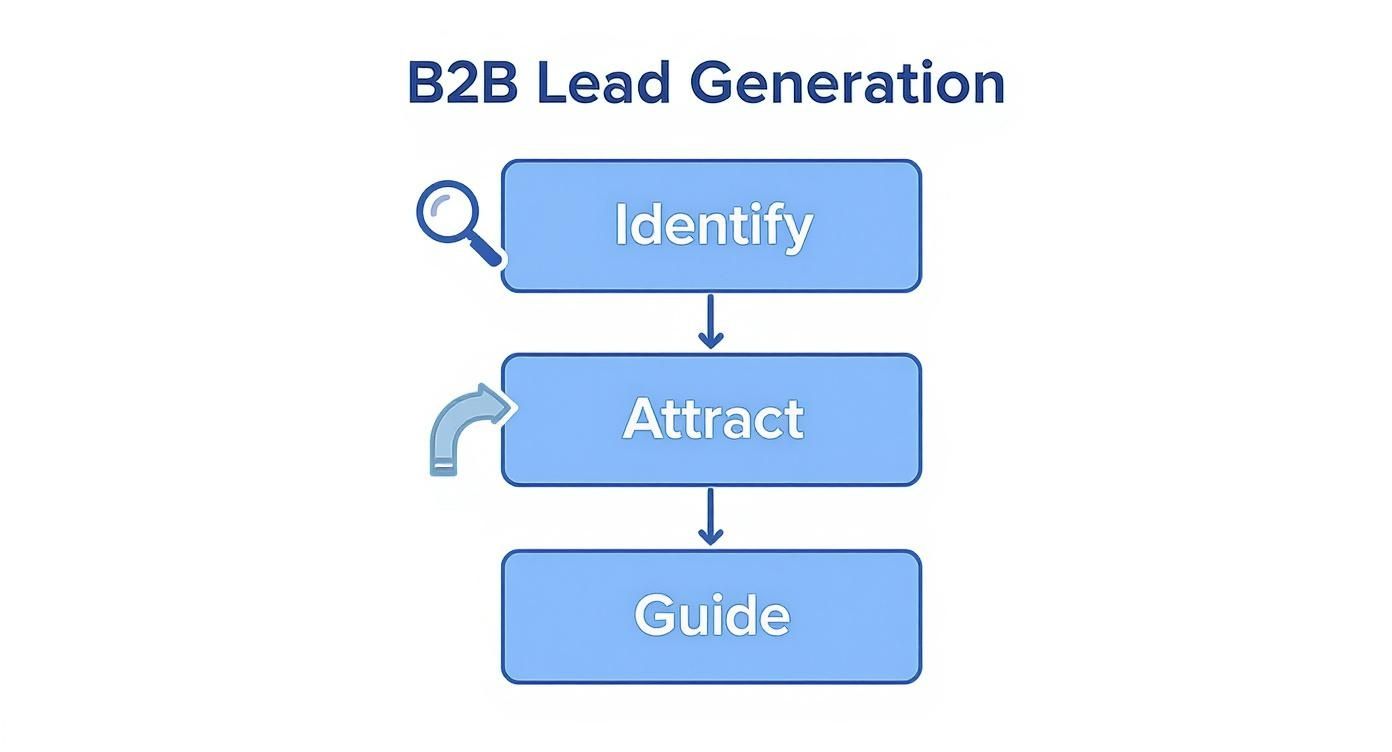
The funnel isn't about passively collecting names; it's an active process of guiding prospects from one stage to the next.
The Marketing-to-Sales Handoff: MQL vs. SQL
One of the most critical moments in this journey is the handoff from marketing to sales. To make sure great leads don't fall through the cracks, smart businesses use clear, shared definitions.
- Marketing Qualified Lead (MQL): This is someone who fits your target customer profile and has engaged with your marketing content (like downloading an eBook), but isn't quite ready for a sales call. They're interested, but still kicking the tires.
- Sales Qualified Lead (SQL): This is an MQL who has taken a specific action showing they intend to buy (like requesting a demo) and has been vetted by the sales team as a genuine opportunity.
This structured approach helps ensure that the sales team spends their valuable time on leads that are actually ready to talk business, making the entire process far more efficient.
Choosing Your B2B Lead Generation Channels

Alright, you know who your ideal customer is and you understand the journey they take. The big question now is: where do you actually find them? This is where we talk about B2B lead generation channels.
Think of these channels like fishing spots. You wouldn't use the same bait and tackle in a shallow stream as you would in the deep ocean. The same logic applies here. You have to show up where your ideal customers are already spending their time.
A "spray and pray" approach is just a fast way to burn through your marketing budget with nothing to show for it. Instead, the smart move is to build a strategic mix of channels that work together to attract, engage, and ultimately win over your target audience.
Each channel has its own unique strengths, and the key is to focus your energy where it will deliver the biggest impact.
Inbound vs. Outbound Channels
Your options really boil down to two main approaches: inbound and outbound. A solid strategy almost always uses a mix of both.
-
Inbound Channels: This is all about attracting customers to you. It’s like a magnet. You create genuinely useful content and set up your online presence so that prospects find you when they're actively looking for solutions.
-
Outbound Channels: This is more of a direct, proactive approach. Think of it like casting a fishing line exactly where you think the fish are. You identify potential customers and reach out to them directly.
Inbound builds a sustainable, long-term pipeline of leads, while outbound lets you go after high-value accounts with surgical precision.
Core B2B Lead Generation Channels
Let's break down some of the most effective channels for small and medium businesses.
Comparing B2B Lead Generation Channels
Choosing where to invest your time and money can feel overwhelming. To make it simpler, we've broken down the top channels to help you see which ones align with your business goals, budget, and timeline.
| Channel | Best For | Typical Cost | Time to Results |
|---|---|---|---|
| Content & SEO | Building long-term authority, trust, and a sustainable lead pipeline. | Low to Medium (content creation, tools) | 6-12+ months |
| Paid Ads (PPC) | Generating leads quickly, targeting specific demographics, and testing offers. | Medium to High (ad spend, management) | Days to weeks |
| Email Marketing | Nurturing existing leads, building relationships, and driving conversions. | Low (platform costs) | Immediate to weeks |
| Networking & Social | Building genuine relationships, targeting high-value accounts, and establishing expertise. | Low (time investment) | Weeks to months |
This table is a starting point. The best mix depends entirely on your specific industry, audience, and growth objectives. Many businesses find that a combination—like using paid ads for quick wins while SEO builds in the background—delivers the most powerful results.
A Closer Look at The Channels
Content Marketing & SEO
This is the ultimate inbound powerhouse. When you create truly valuable blog posts, white papers, and guides that solve your audience's problems, you start attracting organic traffic from search engines like Google. The goal is to become the go-to resource in your niche, capturing leads who are already looking for what you offer.
Paid Advertising (PPC)
Paid channels like Google Ads and social media ads give you speed and precision. You can zero in on specific keywords, job titles, industries, and company sizes, placing your message right in front of qualified prospects. It's the perfect way to get leads in the door while your long-term SEO efforts gain traction.
LinkedIn, in particular, has become the undisputed king of B2B social media. Its professional context and powerful targeting options make it an incredibly effective platform for reaching decision-makers.
Email Marketing
Email is still a cornerstone of B2B communication. It’s perfect for nurturing the leads you’ve already captured, building relationships over time with helpful content, and guiding people through your sales funnel with targeted campaigns. It's direct, personal, and effective.
Professional Networking & Social Selling
Platforms like LinkedIn aren't just for running ads; they are essential for building real relationships. Social selling is all about your sales team actively joining industry conversations, sharing smart insights, and connecting directly with potential clients.
It’s hard to overstate how effective this is. LinkedIn is responsible for a staggering 80% of all B2B leads generated through social media, and 93% of B2B content marketers use it for organic marketing. For more stats like these, check out the data from Snov.io on lead generation. Building a real presence here isn't just an option anymore—it's fundamental.
Turning Interest into Opportunity with Lead Nurturing
Getting a lead is just the start. The real work—and the real magic—happens when you turn that first flicker of interest into a genuine opportunity for your sales team.
Think about it: not every person who downloads your whitepaper is ready to see a demo. And that's okay. The trick is knowing how to separate the curious lookers from the committed buyers and then build a solid relationship with both groups.
This is where two critical processes come in: lead qualification and lead nurturing. Qualification is like a triage system for your pipeline, pointing you to who needs attention right now. Nurturing is the long game—the steady, consistent effort that keeps your brand top-of-mind with everyone else.
When you nail both, you build a powerful system that gets the most value out of every single lead. Your sales team spends their precious time on the hottest prospects, while marketing builds trust with future customers. It’s a smarter, more predictable way to grow.
How to Qualify Your B2B Leads
Lead qualification is all about asking the right questions to figure out if a prospect is a good fit for your business and, just as importantly, if the timing is right for them.
One of the most battle-tested frameworks for this is BANT. It’s a straightforward way to size up a lead’s potential by looking at four key things:
- Budget: Do they actually have the money set aside for a solution like yours?
- Authority: Are you talking to the person who signs the checks, or at least someone who has their ear?
- Need: Is there a real, painful business problem that you can solve for them?
- Timeline: Do they have a deadline or a specific timeframe for making a decision?
Another great technique is lead scoring. You assign points to leads based on who they are and what they do. A "Director of Marketing" from one of your target industries might get +15 points, while a student gets -10. Someone who requests a demo (+25 points) is obviously more engaged than someone who just reads a blog post (+5 points).
By setting a score threshold—let's say 100 points—you can automatically flag a lead as a Sales Qualified Lead (SQL). This data-driven approach means your sales team stops chasing cold leads and only talks to people who are genuinely interested and a great fit.
The Art of Lead Nurturing
So, what about all those leads who aren't ready to pull the trigger just yet? You can't just let them go cold.
This is where lead nurturing becomes your secret weapon. It’s the process of staying in touch and providing real value until they are ready to talk business.
Good nurturing builds trust and cements your status as the expert in your field. You can set up automated email sequences that share helpful case studies, insightful blog posts, or invitations to exclusive webinars. The point isn’t to constantly be selling; it’s to be consistently helpful.
This thoughtful approach to what is B2B lead generation ensures that when the time finally comes to buy, your company is the first one they think of.
Measuring What Matters in Lead Generation
Generating leads is great, but how do you know if your efforts are actually moving the needle? The secret is to look past the "vanity metrics"—things like social media likes or impressions—and zero in on the Key Performance Indicators (KPIs) that tell you the real story.
These are the numbers that reveal the true health of your B2B lead generation engine. When you track them, you stop guessing and start making smart, data-driven decisions that squeeze more value out of every marketing dollar.
The KPIs That Actually Drive Growth
Let's cut through the noise and focus on three essential metrics every small business needs to have on its radar.
1. Cost Per Lead (CPL)
This one is as straightforward as it gets, but it's incredibly powerful. CPL tells you exactly how much you’re spending to bring each new lead in the door, giving you a crystal-clear picture of your financial efficiency.
- How to Calculate It: Total Marketing Spend ÷ Total New Leads Acquired = CPL
- What It Tells You: Is a particular channel burning through your budget with little to show for it? A high CPL will tell you. Is another one a goldmine of efficiency? A low CPL will point the way.
The average CPL for B2B companies hovers around $200, but this can swing wildly depending on your industry. In the hyper-competitive tech space, for instance, it’s not uncommon to see that number climb as high as $900. If you want to dive deeper, you can explore more B2B lead generation benchmarks to see how you stack up.
2. Lead Conversion Rate
This is the ultimate test of your funnel's effectiveness. It measures the percentage of leads who cross the finish line and become paying customers.
- How to Calculate It: (Total Number of Conversions ÷ Total Number of Leads) x 100 = Lead Conversion Rate
- What It Tells You: If your conversion rate is low, it’s a big red flag. It could mean your landing page isn't compelling, your offer is missing the mark, or the leads you're generating just aren't the right fit.
Tracking conversion rates helps you find and fix the leaks in your sales process. Even a small improvement here can have a massive impact on your revenue—without generating a single extra lead.
3. MQL-to-SQL Conversion Rate
Think of this as the quality control check between your marketing and sales teams. It tracks how many of the "Marketing Qualified Leads" (MQLs) are good enough to be accepted by the sales team as "Sales Qualified Leads" (SQLs).
- How to Calculate It: (Total Sales Qualified Leads ÷ Total Marketing Qualified Leads) x 100 = MQL-to-SQL Rate
- What It Tells You: A low rate often signals a disconnect. Maybe marketing is casting too wide a net and bringing in low-quality prospects, or perhaps the handoff process itself is clunky and causing good leads to fall through the cracks. It’s a crucial metric for ensuring your teams are working together, not against each other.
Alright, let's get into some of the questions we hear all the time.
When you're trying to figure out B2B lead generation, a lot of "what ifs" and "how tos" pop up. It's totally normal. Whether you're just getting started or trying to fix a process that isn't working, getting straight answers is the only way forward.
So, let's tackle a few of the big ones we see from small and medium-sized businesses.
Inbound vs. Outbound Lead Generation
People often get tangled up trying to decide between inbound and outbound. The easiest way to think about it is like fishing. You can either put some really good bait in the water and wait for the fish to come to you (inbound), or you can grab a net and go find them yourself (outbound).
- Inbound lead generation is all about creating things people actually want to find. Think helpful blog posts, webinars, or a website that’s optimized for search. You’re pulling them in because they're already looking for a solution like yours.
- Outbound lead generation is more direct. You're not waiting for them to find you. You're reaching out with targeted emails, making calls, or connecting on professional networks to start a conversation.
Honestly, the whole "inbound versus outbound" debate is a false choice. The best strategies don't pick a side—they use both. Inbound builds your brand and creates a steady trickle of leads over the long haul. Outbound lets you go after specific, high-value accounts right now. A smart mix is what modern B2B lead generation is all about.
How Long Until I See Results?
This is the big one, and the honest answer is: it depends entirely on your approach. Setting the right expectations from day one is critical, otherwise, you'll get discouraged and pull the plug too early.
If you’re running paid ads on platforms like Google or LinkedIn, you can see leads coming in within days or weeks. That speed is great for getting quick feedback on your messaging and offers.
But organic channels like content marketing and SEO are a different game altogether. They're a long-term play. You should expect it to take a solid 6 to 12 months of consistent work before you start seeing a reliable flow of leads. You're building an asset, and that just takes time.
Best Channels for a Limited Budget?
When every dollar counts, you have to be smart about where you put it. For the best long-term bang for your buck, nothing beats content marketing and SEO.
Sure, they demand a lot of time and effort upfront. But a single, high-quality blog post can continue to bring in organic leads for years without you spending another dime on ads. You can also get a lot of mileage out of using LinkedIn organically—sharing your expertise and building real relationships costs nothing but your time.
The trick is to not spread yourself too thin. Pick one or two channels you can really own and execute them brilliantly. That will always beat doing a mediocre job across five different platforms.
Ready to stop guessing and start growing? Frozen Crow Inc. provides free marketing audits and custom strategy development to build a lead generation engine that works for your business. Discover our services and get started today.


