


August 20, 2026
A Guide to Outsourced Digital Marketing for Growth
So, what exactly is "outsourced digital marketing"?
It’s when you hire an external agency or a team of consultants to run your marketing playbook. This move gives you instant access to specialized expertise in SEO, content, and paid ads, all without the hefty overhead of building an in-house team. Smart businesses don't just do it to cut costs—they do it to hit the accelerator on growth and get a leg up on the competition.
Why Your Business Needs an Outsourced Partner

Sooner or later, most SMBs and startups hit a frustrating growth ceiling. Your team is stretched thin, everyone's wearing too many hats, and your marketing feels like you're just putting out fires instead of building something. This is that critical moment when bringing in an outsourced partner becomes a strategic necessity, not a luxury.
This isn't just about handing off tasks you don't want to do. It’s about injecting specialized knowledge and agility directly into your operations. An external team brings a fresh perspective, free from internal politics or biases, and they can execute complex, multi-channel campaigns with precision from day one.
Think about it. Instead of spending months recruiting, hiring, and training an internal marketer who might only be great at one thing, you get an entire team of specialists overnight. This typically includes experts in:
- Search Engine Optimization (SEO) to build that crucial long-term organic traffic.
- Pay-Per-Click (PPC) Advertising to drive immediate, highly targeted visitors.
- Content Strategy to pull in and nurture your ideal customers.
- Data Analytics to actually measure what’s working and double down on ROI.
Gaining a Strategic Advantage
Here’s a real-world scenario we see all the time: a SaaS startup needs to break into a new market, fast. Building an in-house team with the right language skills and local market knowledge could easily take a year. An experienced outsourced partner can deploy a localized SEO and PPC campaign in a matter of weeks, generating qualified leads while your internal team stays focused on what they do best—improving the product. That speed-to-market is an undeniable competitive advantage.
The real power of outsourcing isn't just about saving money—it's about investing in velocity. You get access to proven strategies and can execute them faster than your competitors, turning marketing into a predictable growth machine.
This approach is quickly becoming the new standard for agile businesses. The global market for outsourced marketing technology hit a massive $44.09 billion in 2023, and it's projected to nearly double to $86.20 billion by 2030. In fact, 66% of U.S. companies now outsource at least one marketing function. That’s a clear signal that expertise and speed are winning out over bloated internal departments.
Ultimately, the decision to outsource comes down to recognizing when your internal capacity is holding back your potential.
If you want to dig deeper into how this approach can directly benefit your business, you might find our article on the benefits of outsourcing digital marketing really helpful.
Preparing for a Successful Partnership

Before you send a single email to an agency, the most important work happens inside your own walls.
I've seen it time and time again: a company approaches a potential partner with a fuzzy goal like "we need more traffic." This is a recipe for a mismatched relationship and a whole lot of wasted budget. The foundation of any great marketing partnership is a crystal-clear understanding of what you actually need to achieve.
This prep work isn't just about ticking boxes. It ensures you’re investing in specific business outcomes, not just buying services. You need to translate vague wishes into concrete, measurable objectives that an external team can build a real strategy around. For instance, “get more leads” becomes “generate 50 marketing-qualified leads per month from organic search for our new SaaS product.”
That kind of clarity prevents scope creep, aligns expectations from day one, and gives you a real benchmark to measure success against.
Define Your Business Objectives First
Your marketing goals have to tie directly back to your high-level business objectives. If your company's main goal is to break into a new geographic market, your marketing objective isn't just "brand awareness." It's something more tangible, like "establish a digital presence in the target region and generate our first 10 B2B sales conversations within 90 days."
Here’s a simple way to connect the dots:
- Business Goal: What’s the big-picture company target? (e.g., Increase total revenue by 30% this year.)
- Marketing Objective: How will marketing help get there? (e.g., Increase e-commerce sales by 20% and cut customer acquisition cost by 15%.)
- Key Result: What’s the specific, measurable outcome? (e.g., Achieve a 4:1 return on ad spend on all paid campaigns.)
Setting clear goals transforms your relationship with an agency from a simple vendor transaction into a strategic partnership. When both sides are working toward the same measurable finish line, collaboration becomes more focused and effective.
Getting this right also means nailing your communication. Understanding Client Communication Best Practices is vital for fostering strong relationships right from the start.
Audit Your Current Marketing Efforts
With your goals locked in, it's time for a candid look in the mirror. A marketing audit doesn’t have to be some massive, formal undertaking. It's really about being honest about what’s working, what’s tanking, and where your biggest gaps are.
If you want a more structured approach, you can check out our guide on https://frozencrow.com/what-is-a-marketing-audit/ for a deeper dive.
Start by asking yourself a few critical questions:
- Which channels are actually driving revenue right now?
- Where are we throwing time and money with little to no return?
- Do we have the in-house skills for something highly technical, like advanced SEO or programmatic ads?
- What data are we missing that’s keeping us from making better decisions?
This internal audit is your roadmap. It tells you whether you need a full-service agency to take over everything or a specialist to plug a specific hole, like content creation or PPC management. Answering these questions first puts you in a position of strength, ready to have a truly productive conversation with a potential partner.
To help you get started, use this checklist to pinpoint exactly where you need the most help.
Marketing Needs Self-Assessment Checklist
| Marketing Area | Current Status (In-House/None) | Performance Level (1-5) | Outsourcing Priority (High/Medium/Low) |
|---|---|---|---|
| SEO (On-page & Technical) | |||
| Content Creation (Blog, Video) | |||
| Paid Search (Google/Bing Ads) | |||
| Paid Social (Meta, LinkedIn) | |||
| Email Marketing & Automation | |||
| Social Media Management | |||
| Analytics & Reporting | |||
| Website/Landing Page UX |
Filling this out honestly will give you a much clearer picture of your needs, making it far easier to find the right agency that can deliver real impact.
How to Find and Vet the Right Marketing Partner
Finding the right agency can feel like searching for a needle in a haystack. The market is flooded with options, and it’s tough to tell who just talks a good game versus who can actually deliver. This isn’t just about hiring a vendor; you're looking for a genuine growth partner who gets your vision and has the chops to execute.
The trick is to look past the slick sales decks and dig into how they actually work. A great partner isn’t just good at marketing—they’re masters of collaboration, communication, and proving their worth with cold, hard data.
Let's walk through a process that helps you cut through the noise and find the best fit for your business.
Where to Look for Credible Agencies
A quick Google search will bury you in options, but the best partners rarely come from a random search. You want to start where trust has already been built.
Tap into these networks first:
- Industry Communities: Jump into niche Slack channels, LinkedIn groups, or private forums. This is where other founders and marketers share unfiltered, honest feedback about who they’ve worked with.
- Referral Networks: This is always the best place to start. Ask your peers, mentors, or investors for a recommendation. A warm intro from someone who’s already had a great experience is worth its weight in gold.
- Trusted Review Platforms: Sites like Clutch and G2 are solid resources. They offer verified client reviews and detailed service breakdowns that help you shortlist agencies with a proven track record.
The goal here isn't to create a massive list. You're aiming for quality over quantity. Find three to five highly-rated agencies that feel like a good fit, and then get ready to dig deeper.
The RFP Checklist: Questions That Actually Matter
Once you have your shortlist, it’s time to ask the questions that separate the real experts from the rest. A Request for Proposal (RFP) shouldn't be a pricing sheet; it should be a deep dive into an agency's process, philosophy, and—most importantly—its people.
Ditch the generic stuff. You need to probe into how they really operate.
Here are a few critical questions to get you started:
- Who's on the Team? Who, specifically, will be working on my account day-to-day? I want to meet the strategist and account manager who will be my main point of contact before I sign anything.
- How Do You Communicate? What's your standard communication and reporting rhythm? Do you use a project management tool like Asana or Monday? How do you handle after-hours emergencies?
- What's the Onboarding Plan? Walk me through your first 90 days with a new client. What are the key milestones we should expect to hit, and when?
- How Do You Prove ROI? How do you define and measure success for a business like mine? Can you show me a sample report so I can see exactly which KPIs you track?
- Where's Your Niche Expertise? Show me a case study from a company in my industry or with a similar business model. What was the single biggest challenge you solved for them?
These questions force an agency to get off-script and give you a real look at their capabilities. For an even more detailed list of what to ask, check out our complete guide on how to choose a digital marketing agency.
Understanding Agency Pricing Models
Finally, you have to find a pricing model that works for your budget and growth plans. The digital marketing outsourcing market is exploding, set to grow from $25.4 billion in 2024 to a massive $74.76 billion by 2034. That growth means agencies have gotten creative with how they charge. You can find more details about these market trends on grandviewresearch.com.
Knowing these models is crucial for finding a partnership you can actually afford.
Here are the three most common structures you'll see:
| Pricing Model | Best For | Pros | Cons |
|---|---|---|---|
| Monthly Retainer | Ongoing, integrated marketing campaigns. | Predictable costs, a dedicated team, and a focus on long-term strategy. | Higher upfront cost, and it requires a longer commitment to see results. |
| Project-Based | One-off tasks with a clear start and finish. | You get a fixed price and scope. Perfect for things like a website redesign or an SEO audit. | It’s less flexible and doesn't include ongoing management or optimization. |
| Performance-Based | Businesses with very clear, trackable conversion goals (like e-commerce sales). | You only pay for tangible results, like cost-per-lead or a revenue share. | Can get expensive if you're wildly successful. Requires rock-solid tracking. |
Your pricing model should mirror the kind of relationship you want. For a long-term strategic partner, a retainer usually makes the most sense. For a specific, one-time need, project-based is the way to go.
It’s also smart to ask about their operational models. For example, some agencies use white label social media management to scale their services, which can be good to know as it tells you about their structure and flexibility.
Building a Strong Foundation in the First 90 Days
So, you’ve signed the contract. A lot of people see this as the finish line, but it’s really the starting gun. The success of your entire partnership with a digital marketing agency is forged in these first 90 days.
If you wing it, you’re setting yourself up for missed deadlines, mismatched expectations, and a whole lot of wasted budget. But a structured, thoughtful onboarding process? That’s how you build momentum and set the stage for real, long-term growth.
This initial period is all about one thing: integration. Your new partner needs to become a genuine extension of your team, not just another vendor on the payroll. This means moving fast to get them the access they need, setting up clear communication rhythms, and agreeing on exactly what “success” looks like. Honestly, these first few weeks are less about launching massive campaigns and more about pouring the concrete foundation for everything that comes next.
Think about the time it took to get here. The whole process of finding, vetting, and choosing your partner can easily take a few months.
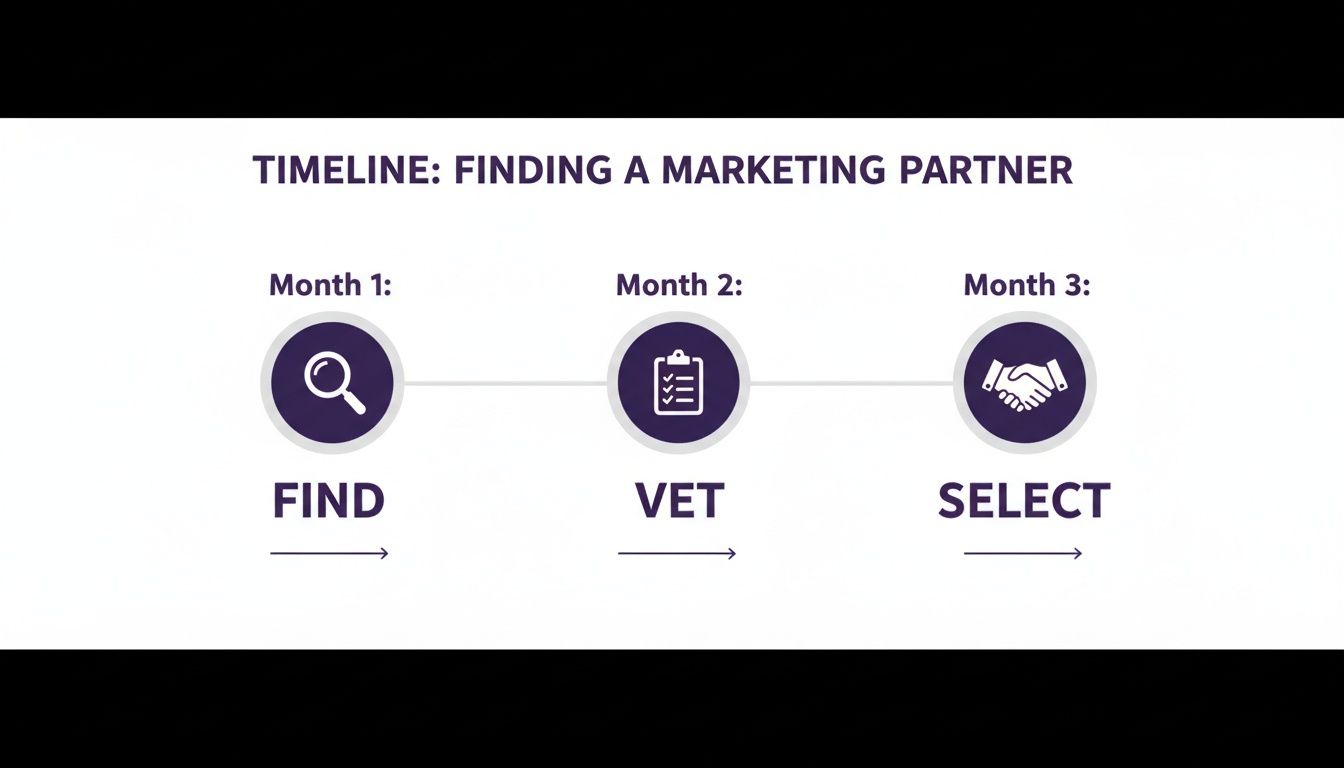
After all that work, you can’t afford to lose steam. Hitting the ground running in the first 90 days is crucial for keeping that forward momentum.
Establishing Access and Communication
Your first week should be totally focused on seamless integration. The goal here is simple: eliminate any technical or informational roadblocks that could slow your agency down. A little proactive work now can save you weeks of frustrating back-and-forth emails later.
I recommend putting together a quick checklist of essential access points:
- Analytics and Ad Platforms: Get them hooked up to your Google Analytics, Google Search Console, and any ad accounts you're running, like Google Ads or Meta Business Suite.
- Website Backend: They’ll need credentials for your CMS (think WordPress or Shopify) to handle things like technical SEO fixes or publishing new content.
- Brand Assets: Create a shared folder in Google Drive or Dropbox. Fill it with your logo files, brand guidelines, color palettes, and any key messaging docs you have.
Once they have the keys, it’s time to establish your communication rhythm. This is more than just scheduling a few meetings; it’s about creating a predictable and reliable flow of information.
A structure I’ve seen work really well is having weekly check-ins for tactical updates and then a bigger monthly call for strategic reviews and planning. For everything in between, a shared channel in Slack or Microsoft Teams keeps the day-to-day conversation fluid and transparent.
Defining and Tracking Key Metrics
With communication flowing, the very next priority is to agree on the metrics that actually matter. Vague goals just lead to vague results. Your agency should take the lead here, helping you build a shared Key Performance Indicator (KPI) dashboard that directly connects their daily work to your business objectives.
This dashboard becomes your single source of truth.
A shared dashboard isn't just a reporting tool—it's an accountability pact. When both you and your agency are looking at the same data, conversations shift from "What did you do?" to "What's working and how do we do more of it?"
Make sure you're focusing on bottom-line metrics, not just vanity numbers. It's easy to get excited about a spike in website traffic, but you need to prioritize numbers that reflect real business impact.
Here are the kinds of KPIs that truly matter:
- Customer Acquisition Cost (CAC): How much are you actually spending to get a new customer through their efforts?
- Return on Ad Spend (ROAS): For every dollar you put into ads, how many dollars in revenue are you getting back?
- Marketing-Qualified Leads (MQLs): How many solid, high-quality leads are being handed over to your sales team?
- Conversion Rate: What percentage of your visitors are actually taking the action you want them to, like making a purchase or filling out a form?
By locking in these fundamentals within the first 90 days, you stop being just a "client" and start becoming a true partner. You're creating a collaborative environment built on transparency, clear goals, and mutual accountability—and that’s how you set your investment up for success right from the start.
Keeping Your Agency on Track for Long-Term Growth
So you’ve signed the contract. The real work starts now. Thinking of your new marketing agency as a "set it and forget it" solution is the fastest way to get disappointing results. The best partnerships are active collaborations—you’re not just a client, you’re the strategic director guiding an expert execution team.
This ongoing management is what turns a one-off campaign into a true growth engine for your business.
A great partnership lives and dies by its feedback loop. This goes way beyond just glancing at a monthly report. It’s about having productive, data-driven conversations about what's working, what isn't, and what we're going to do about it next. This approach turns a passive update into an active strategy session.
This mindset is non-negotiable for success. It's why 66% of U.S. companies now outsource marketing functions, seeing it as a core part of their strategy, not just a way to cut costs. To get the most out of that investment, you have to be in the driver's seat. You can dig into more on outsourcing's strategic role over at Fortunly.com.
The Continuous Optimization Loop
The best framework for managing your agency is what I call the continuous optimization loop. It’s a simple but incredibly powerful cycle: report, analyze, pivot, and execute. You’re constantly using the data from one campaign to make the next one smarter.
Let's say a report shows your LinkedIn ads are bringing in amazing leads, but the cost is through the roof. The conversation shouldn't stop there.
This is where you and your agency need to put your heads together. Is it the ad creative? The audience targeting? Is the landing page not converting well enough? This kind of collaborative troubleshooting is how your marketing spend gets more and more efficient over time.
A strong agency relationship is built on proactive partnership. Your job is to provide the business context and goals; their job is to bring the marketing expertise and fresh ideas. When those two things click together in a solid feedback loop, your results start to compound.
Giving Good Feedback and Spotting Red Flags
Constructive feedback is everything. When performance takes a dip—and it will—approach it with curiosity, not blame.
Frame it as a shared challenge: "Hey, I noticed our cost-per-lead jumped this month. What are your initial thoughts on why that might be, and what can we test to get it back down?" This fosters a problem-solving environment.
At the same time, you have to keep your eyes open for red flags that signal the partnership might be heading south.
Be on the lookout for these warning signs:
- Vague or Fluffy Reporting: If your reports are packed with vanity metrics like impressions but you can't see a clear line to actual business goals like leads or sales, that's a huge problem.
- No Proactive Ideas: A good partner doesn't just sit back and wait for your instructions. They should be bringing new ideas and strategic recommendations to you, unprompted.
- High Staff Turnover: Are you constantly being handed off to a new account manager? This can kill momentum and often points to internal issues at the agency.
- Radio Silence: If emails go unanswered, meetings get pushed, or you just feel like you're in the dark, it's a clear sign you aren't a priority.
By actively managing the relationship and staying alert, you make sure your investment in an agency continues to pay off with real, measurable growth year after year.
Got Questions About Outsourcing Your Marketing?
Even when you see the potential, it's smart to have questions before you hand over the keys to a marketing partner. Let's walk through some of the most common concerns we hear from business owners, so you can feel confident in your decision.
So, What's This Going to Cost Me?
There’s no single price tag for outsourced marketing—it really depends on what you need. For most small and medium-sized businesses, a monthly partnership can run anywhere from $2,500 to over $10,000. If you're looking at a one-time project, like a deep-dive SEO audit or a full website build, that could be between $5,000 and $25,000.
But honestly, the raw number on the invoice is only half the story. The real focus should be on the return you get for that investment. A cheap agency that delivers zero results is way more expensive than a premium partner who doubles your revenue. The right investment pays for itself.
Will an Outside Team Really Get My Niche Brand?
This is a big one. A top-tier partner won’t just slap a generic marketing template on your business and call it a day. Their first move should always be a deep discovery phase where they get completely immersed in your world—your brand, your customers, and your industry.
Here’s what that looks like in practice:
- Talking to Your Team: They should want to interview your leadership and sales folks to understand your goals and what makes your customers tick.
- Sizing Up the Competition: A thorough analysis of what your competitors are doing right (and wrong) is non-negotiable. It’s how you find gaps in the market.
- Deep-Diving into Your Audience: They’ll build out detailed profiles of your ideal customers. This ensures every ad, email, and social post hits the mark.
A great partner proves they can learn your business. Always ask to see case studies from clients in your industry or a similar one. It shows they have a process for getting up to speed and mastering new markets quickly.
How Do I Keep Control of My Own Marketing?
Outsourcing isn't about giving up control. It’s about delegating the day-to-day execution to experts while you stay in charge of the big-picture strategy. A solid partnership is built on total transparency, so you always know what’s going on.
It all comes down to setting up a good system from the start. Your job shifts from managing tiny tasks to directing the overall results. A quality partner like Frozen Crow Inc. makes this easy by giving you access to live reporting dashboards, setting up regular check-in calls, and having clear approval processes for things like ad creative and budgets. You should always have the final say.
Ready to see how an expert partner can drive real growth for your business? Frozen Crow Inc. offers a free marketing audit to pinpoint your biggest opportunities. Find your path to scalable results.


