


October 13, 2026
10 Potent Social Media Engagement Strategies for 2025
In the crowded digital marketplace, a high follower count means little without meaningful interaction. Likes and passive views are vanity metrics; the real currency of social media is authentic engagement. This is where a passive audience transforms into an active community that trusts, advocates for, and ultimately drives business for your brand. Moving followers from silent observers to enthusiastic participants is the single most important goal for any small or medium business looking to achieve sustainable growth online.
This guide is designed to be your playbook for that transformation. We are moving past the generic advice and diving straight into a comprehensive collection of actionable social media engagement strategies. You won't find vague theories here. Instead, you'll discover a detailed breakdown of ten powerful tactics, each with practical implementation steps and real-world examples tailored for businesses ready to make a measurable impact.
From launching compelling User-Generated Content (UGC) campaigns and leveraging interactive polls to building thriving communities in Facebook Groups and mastering live-stream events, this listicle provides a blueprint for fostering genuine connections. We'll cover everything you need to know to create conversations, build brand loyalty, and turn your social media presence into a powerful engine for growth. Prepare to implement strategies that not only boost your metrics but also build lasting relationships with your customers.
1. User-Generated Content (UGC) Campaigns
User-Generated Content (UGC) campaigns are powerful social media engagement strategies that shift the creative focus from your brand to your audience. This approach involves actively encouraging customers to create and share content, such as photos, videos, or reviews, that features your products or services. By doing so, you tap into a stream of authentic, peer-to-peer marketing that builds trust and community far more effectively than traditional advertising.

When customers become your brand advocates, their content serves as genuine social proof. This not only boosts your credibility but also provides a continuous source of fresh, diverse content for your own social media channels, saving you time and resources.
Why It Works So Well
UGC leverages the inherent trust people have in recommendations from peers over brand-led messages. According to consumer research, audiences find UGC 9.8x more impactful than influencer content when making a purchasing decision. It humanizes your brand, showcasing real people enjoying your products in real-world scenarios. Iconic examples include GoPro's customer-shot adventure videos and Coca-Cola’s wildly successful #ShareACoke campaign, both of which turned customers into enthusiastic brand storytellers. This strategy transforms passive followers into an active, engaged community.
How to Implement a UGC Campaign
Successfully launching a UGC campaign requires a clear plan and compelling incentives. Here are actionable steps to get started:
- Create a Simple, Memorable Hashtag: Develop a unique and catchy hashtag that is easy to spell and directly related to your campaign or brand. This makes it easy to track submissions and build momentum.
- Offer Meaningful Incentives: Motivate your audience to participate by offering prizes, discounts, or the chance to be featured on your official social media pages. The reward should match the effort required to create the content.
- Set Clear Guidelines: Clearly define what kind of content you’re looking for. Specify rules regarding content quality, brand mentions, and any restrictions to ensure submissions align with your brand values and campaign goals.
- Promote and Engage: Announce your campaign across all your channels. Actively engage with every submission by liking, commenting, and, with permission, resharing the best content to your own feed to showcase appreciation and encourage more participation.
2. Interactive Stories and Polls
Interactive Stories and polls are dynamic social media engagement strategies that leverage native platform features to foster real-time audience participation. This approach uses tools like Instagram Stories, Facebook Stories, and Twitter polls to create ephemeral, engaging content such as Q&As, quizzes, and live discussions. By inviting immediate interaction, you transform passive viewing into an active, two-way conversation that boosts engagement and strengthens community bonds.

These features tap into the audience's desire for instant gratification and involvement. When followers can vote, ask questions, or test their knowledge, they feel more connected to your brand, making this a highly effective method for gathering feedback and building loyalty.
Why It Works So Well
The temporary nature of Stories creates a sense of urgency, or Fear of Missing Out (FOMO), encouraging users to engage immediately. This strategy provides invaluable, direct feedback from your audience, allowing you to tailor products, services, and content to their preferences. It’s an authentic way to show you are listening. Great examples include Sephora using polls in makeup tutorials to let viewers choose the next product, or the NBA running game prediction polls that generate massive buzz. This tactic makes your audience feel seen and valued, turning your social media channel into a participatory experience rather than a one-way broadcast.
How to Implement Interactive Stories and Polls
Executing an effective interactive Story strategy requires consistency and creativity to keep your audience engaged. Here are actionable steps to get started:
- Ask for Opinions: Use polls, sliders, and quiz stickers to ask your audience for their preferences. This can be anything from "Which new product color do you prefer?" to "What content should we create next?"
- Host Q&A Sessions: Dedicate a Story to answering audience questions using the Q&A sticker. This is a fantastic way to address common concerns, share expertise, and add a personal touch to your brand.
- Create Quizzes and Trivia: Test your audience’s knowledge about your industry or brand. This gamifies the experience, making it fun and shareable while subtly reinforcing brand messaging.
- Promote and Repurpose: Announce your interactive sessions in advance to build anticipation. Save the most valuable or popular Stories as Highlights on your profile for new followers to discover later.
For a deeper look into a broader campaign framework, you can learn more about how these tactics fit into comprehensive social media marketing strategies.
3. Community Building and Facebook Groups
Community building is a long-term social media engagement strategy focused on creating dedicated online spaces where like-minded individuals can gather. Platforms like Facebook Groups allow you to cultivate a hub where customers and fans can share experiences, ask questions, and build relationships around your brand or shared interests, fostering deep, authentic connections and loyalty.
Unlike a public-facing social media page, these communities offer a sense of exclusivity and belonging. This shifts the dynamic from brand-to-consumer broadcasting to a more valuable and sustainable member-to-member interaction model, where your brand acts as a facilitator rather than a salesperson.
Why It Works So Well
A dedicated community transforms your brand from a product or service into a central part of a customer's lifestyle or professional identity. It provides a direct line of communication with your most engaged audience, offering invaluable feedback and insights. This strategy excels at humanizing your brand and nurturing superfans who become powerful advocates. For example, Peloton’s Official Member Page and Adobe's Creative Cloud Community have become indispensable resources where members find motivation, solve problems, and connect, significantly boosting brand affinity. This approach is a cornerstone of effective customer retention marketing strategies.
How to Implement Community Building
Creating a thriving community requires active management and a commitment to providing value beyond your products. Here are actionable steps to get started:
- Establish Clear Community Guidelines: From the start, post and enforce rules for conduct, self-promotion, and appropriate content. This ensures the space remains a positive and safe environment for all members.
- Provide Exclusive Value: Make the group an essential resource by offering exclusive content, early access to new products, Q&A sessions with experts, or unique tutorials. This gives members a compelling reason to join and stay active.
- Encourage Member-to-Member Interaction: Facilitate conversations by posing open-ended questions, creating themed discussion days, and celebrating member contributions. Your goal is to get members talking to each other, not just to you.
- Actively Participate and Moderate: Be present in the community. Answer questions, guide conversations, and mediate conflicts. To foster deeper connections and reward active participants, consider implementing robust community incentive programs to recognize top contributors.
4. Influencer Partnerships and Collaborations
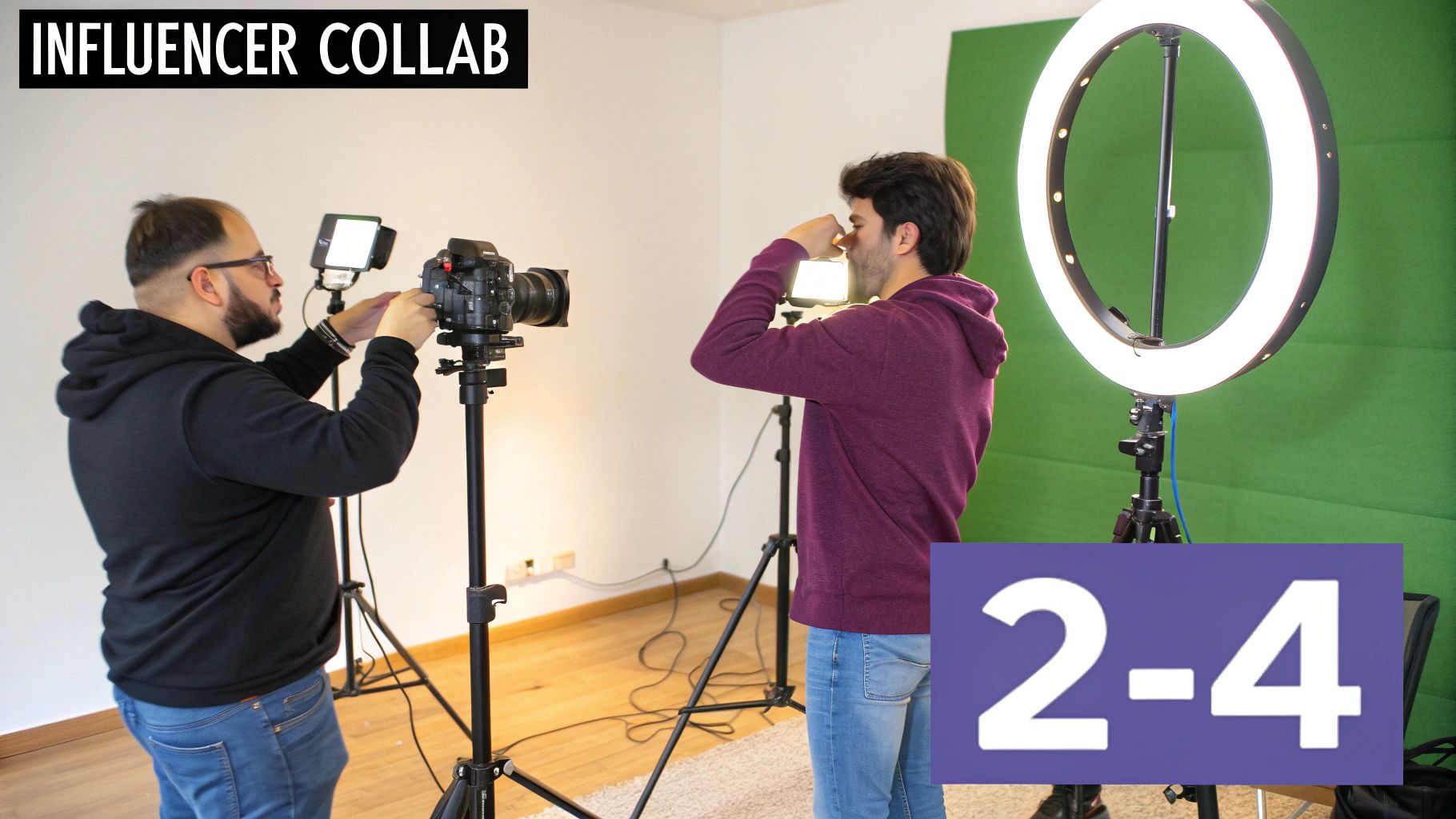
Influencer partnerships are powerful social media engagement strategies that involve collaborating with individuals who have established credibility and a dedicated following within a specific niche. This approach allows your brand to tap into an influencer's trusted relationship with their audience, presenting your products or services through a voice they already respect and follow. It’s a way to authentically reach highly targeted communities and bypass the noise of traditional advertising.

By leveraging an influencer's creativity and connection, you can amplify your brand message, generate high-quality content, and drive meaningful conversations. This strategy effectively borrows the trust and authenticity that influencers have spent years building with their communities, making your brand's introduction feel more like a warm recommendation than a cold advertisement.
Why It Works So Well
Influencer collaborations work because they are built on the foundation of trust. Consumers are increasingly skeptical of direct brand messaging but are highly receptive to recommendations from people they admire. This form of social proof is incredibly persuasive, as it frames your product within the context of a lifestyle or value system the audience already buys into. Brands like Daniel Wellington famously pioneered this model with micro-influencers, flooding Instagram with authentic watch photos, while Gymshark built its empire by partnering with fitness influencers who embodied the brand's aspirational culture.
How to Implement Influencer Partnerships
A successful influencer partnership requires careful planning, clear communication, and a focus on authentic alignment. Here are actionable steps to get started:
- Choose Influencers Aligned with Your Brand: Look beyond follower count and focus on brand fit. Select partners whose values, audience demographics, and content style genuinely match your own. A smaller, highly engaged audience is often more valuable than a large, disengaged one.
- Prioritize Engagement Over Follower Counts: High follower numbers can be deceiving. Analyze an influencer's engagement rate (likes, comments, shares) to gauge the true connection they have with their audience. This is a far better indicator of potential ROI.
- Establish Clear Expectations and Deliverables: Create a detailed brief outlining campaign goals, key messages, content requirements, usage rights, and compensation. Clarity from the start prevents misunderstandings and ensures both parties are aligned.
- Build Long-Term Relationships: While one-off campaigns can be effective, long-term partnerships often yield better results. A sustained relationship allows the influencer to become a genuine brand advocate, building deeper trust and authenticity with their audience over time.
5. Live Streaming and Real-Time Engagement
Live streaming is a powerful social media engagement strategy that leverages real-time video to create an immediate, unfiltered connection with your audience. This approach involves broadcasting live to platforms like Instagram, Facebook, LinkedIn, or Twitch, allowing for spontaneous interaction, direct feedback, and a shared experience that pre-recorded content cannot replicate. It fosters a sense of urgency and exclusivity, making viewers feel like part of an in-the-moment event.
This raw, authentic format allows brands to pull back the curtain and show the human side of their business. By engaging directly with comments and questions as they appear, you can build a loyal community that feels seen, heard, and valued.
Why It Works So Well
Live video capitalizes on the audience's fear of missing out (FOMO) and the inherent authenticity of unedited content. Viewers are significantly more likely to watch a live video than a pre-recorded one, with platforms like Facebook reporting that live videos produce 6x more interactions than traditional videos. It creates a direct line of communication, allowing you to answer questions, address concerns, and gather feedback instantly. Examples range from LinkedIn Live Q&As with industry experts to Instagram Live workout classes and behind-the-scenes product reveals, all of which thrive on direct audience participation.
How to Implement a Live Streaming Strategy
A successful live stream requires planning to ensure a smooth broadcast, but also the flexibility to embrace spontaneity. Here are actionable steps for your next live session:
- Promote Your Stream in Advance: Build anticipation by announcing your live event across all your social channels. Use countdown timers and post reminders to maximize attendance when you go live.
- Prepare Key Talking Points: Have a loose outline of topics you want to cover to keep the conversation on track. However, avoid a rigid script to maintain a natural, conversational flow.
- Test Your Technical Setup: Before broadcasting, thoroughly check your internet connection, audio, and video quality. A poor technical experience can cause viewers to drop off quickly.
- Engage with Your Audience Continuously: Make interaction the core of your stream. Acknowledge viewers by name, answer their questions as they come in, and encourage participation through polls or shout-outs. This active engagement is crucial for building a strong community connection.
6. Storytelling and Brand Narrative
Storytelling and Brand Narrative is a powerful social media engagement strategy that moves beyond promoting products to creating an emotional connection with your audience. This approach involves weaving a consistent and compelling story around your brand's values, mission, and personality. By focusing on human experiences and purpose rather than just features, you build a memorable identity that resonates on a much deeper level.
When your social media content tells a cohesive story, followers feel like they are part of a larger journey. This fosters loyalty and transforms passive viewers into a dedicated community that is invested in your brand’s success, not just its next sale.
Why It Works So Well
Effective storytelling taps into fundamental human psychology; people are wired to connect with narratives, not data sheets. A strong brand narrative gives your audience something to believe in, making your company more relatable and trustworthy. Instead of just selling a product, you are sharing a purpose. For instance, Patagonia’s narrative of environmental activism and outdoor adventure inspires customers to support a cause, while Nike’s stories of athletic achievement empower them to push their limits. These brands don't just have customers; they have followers who share their values.
How to Implement Storytelling and Brand Narrative
Building a compelling narrative requires consistency and a clear understanding of your brand's core identity. Here are actionable steps to integrate this strategy:
- Define Your Brand Personality: Establish a clear voice and tone. Are you a mentor, an innovator, a challenger, or a friend? This personality should inform every post, comment, and caption you create.
- Focus on Transformation, Not Features: Instead of listing what your product does, tell stories about how it changes your customers' lives. Share testimonials, case studies, or behind-the-scenes content that highlights the positive impact you make.
- Use Visuals to Enhance the Story: Combine strong written content with compelling images, videos, and graphics. Visuals can convey emotion and context far more quickly than text alone, making your narrative more immersive.
- Maintain Consistency Everywhere: Your brand story must be the same across all platforms, from your Instagram feed to your customer service emails. For a deeper look into this concept, you can learn more about how to build brand awareness on frozencrow.com.
7. Hashtag Strategy and Trend Participation
A strategic approach to hashtags and trend participation is one of the most effective social media engagement strategies for boosting discoverability and relevance. This tactic involves more than just adding popular tags; it's about carefully selecting hashtags to reach specific audiences and actively participating in trending conversations to insert your brand into the cultural zeitgeist. By doing so, you can dramatically increase your content's visibility beyond your existing followers.
When executed correctly, this strategy places your brand in front of users who are already actively searching for or engaging with specific topics. This makes your content feel timely and organic rather than disruptive, fostering a natural connection with potential new customers.
Why It Works So Well
Hashtags categorize content, making it searchable and helping algorithms recommend it to interested users. Participating in trends allows brands to showcase their personality and relevance. A classic example is Oreo's "You can still dunk in the dark" tweet during the 2013 Super Bowl blackout, a masterful piece of real-time marketing that went viral. This approach works because it taps into ongoing, large-scale conversations, giving brands a platform to demonstrate wit, relevance, and a human touch.
How to Implement a Hashtag and Trend Strategy
A successful strategy requires research, creativity, and agility. Here’s how to effectively integrate this into your social media efforts:
- Mix Your Hashtags: Combine broad, popular hashtags (like #Marketing) with niche, community-specific ones (#SmallBusinessMarketing) and a unique branded hashtag (#YourBrandName). This balanced approach maximizes both reach and targeted engagement.
- Research and Vet Trends: Before jumping on a trend, ensure it aligns with your brand voice and values. Misinterpreting a trend's context can lead to negative backlash, so do your homework to understand its origin and sentiment.
- Create a Unique Branded Hashtag: Develop a simple, memorable hashtag for your brand or specific campaigns. Encourage your audience to use it, creating a centralized hub of content related to your business, similar to a UGC campaign.
- Monitor Performance and Adapt: Use social media analytics to track which hashtags and trends drive the most engagement for your content. Use these insights to refine your strategy over time, focusing on what resonates most with your audience.
8. Content Curation and Thought Leadership
Content curation combined with thought leadership is a highly effective social media engagement strategy that establishes your brand as a trusted authority. Instead of only creating original content, this approach involves systematically finding, organizing, and sharing the most valuable and relevant information from other sources within your industry. By adding your unique insights and commentary, you transform simple sharing into an act of leadership, becoming the go-to resource for your audience.
This strategy positions your brand as knowledgeable and helpful, saving your followers the time and effort of sifting through industry noise. It demonstrates that you are confident enough to highlight other experts, which builds credibility and trust with your community.
Why It Works So Well
This approach works because it consistently provides value beyond self-promotion. By curating top-tier content, you solve a major pain point for your audience: information overload. When you add your own perspective, you frame the conversation and showcase your expertise without having to create every piece of content from scratch. This makes your social media feed an indispensable resource. For example, HubSpot has mastered this by sharing cutting-edge marketing articles and data, always adding their own inbound perspective, while Gary Vaynerchuk offers sharp commentary on curated entrepreneurship news, reinforcing his personal brand.
How to Implement Content Curation and Thought Leadership
Building a reputation as a thought leader through curation requires a consistent and strategic approach. Here are actionable steps to get started:
- Identify Credible Sources: Follow industry-leading publications, influencers, and research institutions. Use tools like Feedly or BuzzSumo to discover high-performing content relevant to your niche.
- Add Your Unique Perspective: Never share a link without context. Add your own commentary, ask a thought-provoking question, or provide a key takeaway. This is the "thought leadership" part of the strategy.
- Credit the Original Creator: Always tag and mention the original source when you share their content. This fosters goodwill, encourages cross-promotion, and demonstrates professional integrity.
- Maintain a Consistent Niche: Focus your curation efforts on a specific set of topics directly related to your audience's interests and your brand's expertise to build a clear and authoritative voice.
9. Social Media Contests and Giveaways
Social media contests and giveaways are classic engagement-boosting strategies that incentivize audience participation through prizes. This approach encourages specific actions like sharing content, tagging friends, or following your page, leading to rapid growth in visibility, followers, and interaction. By offering a desirable reward, you create a powerful and immediate reason for your audience to engage with your brand.
When executed correctly, these campaigns act as a catalyst for viral reach. Each entry, share, and tag exposes your brand to new, relevant audiences, creating an exponential growth effect that is difficult to achieve through organic content alone.
Why It Works So Well
The psychology behind contests is simple: they tap into our natural desire to win and receive something of value for minimal effort. This creates a low-barrier entry point for engagement, making it one of the most effective social media engagement strategies for quick results. The excitement generates a significant, albeit temporary, surge in key metrics and brand awareness. Successful examples include beauty brand Glossier’s product launch giveaways that generate massive hype, or travel companies offering all-inclusive vacation packages in exchange for follows and shares, instantly expanding their reach.
How to Implement a Contest or Giveaway
A successful giveaway requires careful planning to ensure it attracts your target audience and complies with platform rules. Here are actionable steps to launch your own:
- Choose a Relevant Prize: Select a prize that is highly desirable to your ideal customer, not just the general public. This ensures you attract followers who are genuinely interested in your brand, rather than just freebies.
- Set Clear and Simple Rules: Make entry requirements easy to understand and follow. Common actions include liking the post, following your account, tagging one or two friends, and sharing the post to their story. Complicated rules will drastically reduce participation.
- Promote It Everywhere: Announce your contest across all your marketing channels, including your email newsletter, website banner, and other social media profiles. Consistent promotion is key to maximizing reach and entries.
- Comply with Platform Guidelines: Each social media platform has specific rules for promotions. Clearly state that the giveaway is not sponsored by the platform (e.g., Instagram or Facebook) and include official rules, eligibility, and the contest end date.
10. Social Listening and Responsive Engagement
Social listening and responsive engagement is a proactive social media engagement strategy that goes beyond simply posting content. It involves actively monitoring social platforms for mentions of your brand, competitors, and industry-specific keywords, then using these insights to engage in meaningful conversations. This approach transforms your social media presence from a one-way broadcast channel into a dynamic two-way communication hub, allowing you to build relationships and manage your reputation in real time.
By tuning into these conversations, you gain unfiltered access to customer feedback, identify pain points, and discover opportunities to delight your audience. This strategic listening allows you to be a present and helpful brand, addressing concerns before they escalate and capitalizing on positive sentiment as it happens.
Why It Works So Well
This strategy is effective because it demonstrates that your brand is attentive and genuinely cares about its customers. Responding quickly and thoughtfully to both praise and criticism builds immense trust and loyalty. According to social media research, 79% of consumers expect brands to respond within 24 hours. Exceptional examples include airlines like JetBlue using Twitter for real-time customer service during weather delays or brands like Wendy's using witty, timely responses to engage with followers. This attentiveness makes customers feel heard and valued, turning potentially negative experiences into positive brand interactions.
How to Implement Social Listening
Effective social listening requires the right tools and a clear process for engagement. Here are the key steps to implement this strategy:
- Set Up Monitoring Tools: Use social listening tools like Brand24, Sprout Social, or even free options like Google Alerts to track mentions of your brand name, products, key personnel, and relevant industry hashtags.
- Respond Promptly and Appropriately: Speed is crucial. Aim to respond to mentions as quickly as possible, especially negative ones. Develop clear guidelines for your team on tone of voice and how to handle different types of comments, from customer complaints to praise.
- Turn Insights into Action: Don't just respond; analyze the data you collect. Use customer feedback and recurring questions to inform your content strategy, identify product improvement opportunities, or create helpful FAQs.
- Engage Beyond Your Mentions: Actively search for conversations about problems your product or service can solve. Join relevant discussions and offer helpful advice without a hard sell to build authority and attract new followers.
Top 10 Social Media Engagement Strategies Comparison
| Strategy | Implementation Complexity 🔄 | Resource Requirements ⚡ | Expected Outcomes 📊 | Ideal Use Cases 💡 | Key Advantages ⭐ |
|---|---|---|---|---|---|
| User-Generated Content (UGC) Campaigns | Medium: Requires ongoing moderation | Low to Medium: Community management | High engagement and organic reach | Brands seeking authentic customer content | Builds trust, cost-effective, high engagement |
| Interactive Stories and Polls | Low to Medium: Frequent content creation | Low: Platform tools | Immediate feedback and engagement | Real-time audience interaction and feedback | High engagement, algorithm friendly |
| Community Building and Facebook Groups | High: Time-intensive moderation | Medium to High: Dedicated managers | Strong brand loyalty and advocacy | Brands aiming for deep, long-term relationships | Builds loyalty, valuable insights |
| Influencer Partnerships and Collaborations | Medium to High: Partnership management | Medium to High: Budget for influencers | Targeted reach and authentic messaging | Brands wanting to leverage trusted influencers | Access to targeted audiences, scalable |
| Live Streaming and Real-Time Engagement | High: Requires skilled hosts and tech setup | Medium: Equipment and planning | Authentic engagement, instant feedback | Brands needing immediate, spontaneous interaction | Builds personal connections and trust |
| Storytelling and Brand Narrative | High: Needs creative planning | Medium to High: Creative resources | Long-term emotional engagement | Brands focusing on emotional connection and loyalty | Differentiates brand, builds loyalty |
| Hashtag Strategy and Trend Participation | Low: Mainly content tagging strategy | Low: Minimal budget | Increased discoverability and reach | Brands wanting to increase visibility quickly | Cost-effective, connects to trends |
| Content Curation and Thought Leadership | Medium: Continuous research and posting | Medium: Expertise and time | Builds authority and trust | Brands positioning as industry leaders | Establishes expertise, consistent value |
| Social Media Contests and Giveaways | Medium: Contest setup and management | Medium to High: Prize budget | Rapid engagement and follower growth | Brands driving fast engagement and viral sharing | Increases engagement and reach |
| Social Listening and Responsive Engagement | Medium to High: Continuous monitoring | Medium to High: Dedicated team | Improved customer service and insights | Brands prioritizing customer care and reputation | Rapid response, valuable insights |
Turning Strategy into Sustainable Growth
Navigating the landscape of social media engagement can feel like an overwhelming task, but as we've explored, the path to building a vibrant online community is paved with clear, actionable strategies. We've journeyed through ten powerful tactics, from leveraging the authentic voice of your customers with User-Generated Content campaigns to fostering deep connections in dedicated Facebook Groups. We've seen how real-time interaction through Live Streaming and Interactive Stories can transform passive followers into active participants, and how a sophisticated Hashtag Strategy can amplify your reach far beyond your existing audience.
The core lesson is this: effective social media engagement is not a monolithic, one-size-fits-all solution. It's a dynamic, responsive process rooted in authenticity and a genuine desire to connect. Each strategy, whether it’s the strategic amplification offered by Influencer Partnerships or the community-building excitement of a well-executed Giveaway, serves as a unique tool in your marketing arsenal. Your brand's success will be defined not by attempting to do everything at once, but by a thoughtful and consistent application of the right tactics for your specific audience and goals.
From Insights to Action: Your Next Steps
The true value of these social media engagement strategies lies in their implementation. Information without action is just noise. To turn these insights into tangible results and sustainable growth, you need a clear, focused plan. Don't let analysis paralysis stall your progress.
Your immediate action plan should include:
- Audit and Select: Review the ten strategies discussed. Which two or three resonate most strongly with your brand's voice and current resources? A startup with a visually compelling product might prioritize a UGC campaign, while a service-based business could focus on building thought leadership through Content Curation and community building.
- Set Measurable Goals: Define what success looks like. Is it a 20% increase in comments per post? A 10% growth in story poll participation? Or is it a more direct metric, like website clicks from your social channels? Attach specific, time-bound numbers to your chosen strategies.
- Create a Content Calendar: Plan your execution. Schedule your live streams, map out your interactive story topics, and outline the themes for your brand storytelling. A calendar brings structure to your creativity and ensures consistency, a critical factor in building audience trust and expectation.
- Listen, Measure, and Adapt: This is the most crucial step. Use social listening tools to monitor conversations and sentiment. Track your key metrics closely. If a strategy isn't delivering the expected results, don't be afraid to pivot. Perhaps your audience prefers Q&A sessions over interviews, or they engage more with educational carousels than single-image posts. The data will guide your evolution.
Ultimately, mastering these social media engagement strategies is about transforming your social media presence from a simple broadcast channel into a thriving ecosystem. It’s about creating a space where your audience feels seen, heard, and valued. This deep level of connection is what turns followers into loyal customers and customers into passionate brand advocates, creating a powerful, self-sustaining cycle of growth that directly impacts your bottom line. The effort you invest in genuine engagement is an investment in the long-term health and success of your business.
Ready to transform your social media engagement from a daily task into a powerful growth engine? The experts at Frozen Crow Inc. specialize in developing and executing data-driven strategies that build communities and drive conversions. Let us handle the complexities of digital marketing so you can focus on what you do best. Visit Frozen Crow Inc. to learn how our integrated marketing and IT services can elevate your brand's digital presence.


