


October 13, 2026
How to Hire Marketing Agency: A Practical Guide to Selecting the Right Partner
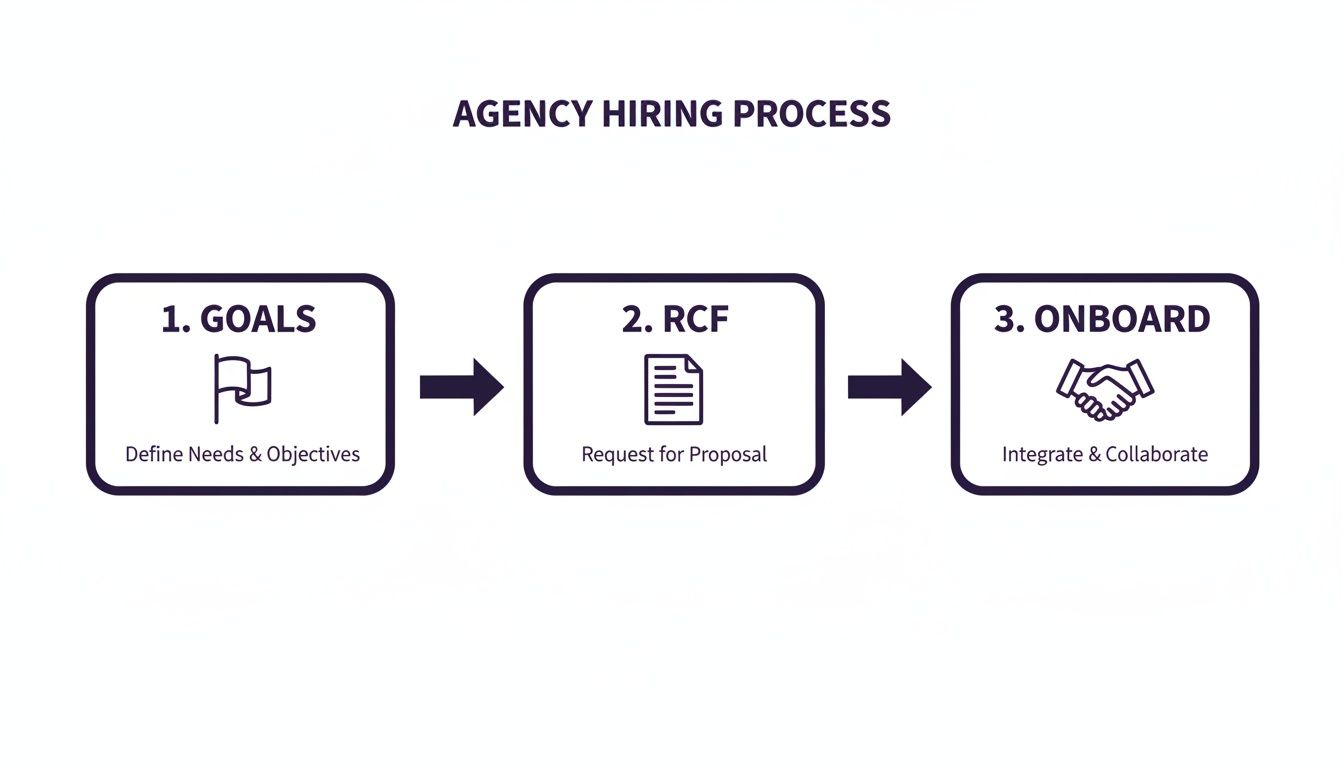
Looking to hire a marketing agency? Start with a six-phase roadmap that guides you from goal setting all the way through to onboarding. This framework trims uncertainty and speeds up your time to launch.
Getting Clear On Your Hiring Roadmap
Right now is a prime moment to bring in outside expertise. The global marketing agency industry reached $369.56 billion in 2024 and is on pace to hit $386.36 billion by 2025 at a 4.5% CAGR. Discover more insights about marketing agency statistics.
If you want a refresher on what marketing agencies do, check out What Does a Digital Marketing Agency Do.
High-Level Hiring Phases
Before you draft an RFP or schedule vendor meetings, skim this snapshot. It shows each phase’s core action and the result you should expect.
| Hiring Phase | Key Action | Outcome |
|---|---|---|
| Goals | Set objectives and budgets | Clear success criteria |
| RFP | Craft detailed request for proposals | Targeted agency responses |
| Evaluation | Score proposals using rubric | Data-driven shortlist |
| Negotiation | Finalize pricing and terms | Balanced contract |
| Onboarding | Share assets and run kickoff | Smooth collaboration |
With this overview in hand, you’ll see how each stage builds on the last.
Next Steps For Your Team
Round up your key stakeholders, assign clear responsibilities, and mark these milestones on your calendar.
- Use the table above at your kickoff to get everyone on the same page.
- Hold brief check-ins after each phase to keep momentum.
- Focus on transparency—agencies win by showing big ideas, not hiding behind jargon.
Clarity beats complexity. Let agencies shine with creative strategies instead of endless specifications.
As proposals come in, measure them against real metrics: industry fit, past performance, team structure. During negotiation, iron out billing cycles, change orders, and any variable fees to avoid unexpected costs.
Once the contract is signed, make sure you:
- Share brand assets, platform access, and your style guide.
- Host a kickoff workshop to nail down timelines, communication cadences, and KPIs.
- Celebrate early wins—whether it’s a spike in click-through rates or on-schedule content delivery—to build mutual trust.
Finally, schedule a 30-day review to tweak scope or resources based on real results. This six-phase path sets the stage for a productive partnership and faster ROI.
Preparing Your Team To Hire A Marketing Agency
Pulling marketing, finance and product folks into the same room can feel like herding cats—but it’s the single best way to start an agency search. Early alignment around goals, budgets and timelines sets everyone up for success.
• The Chief Marketing Officer paints the big-picture vision and defines success metrics.
• Finance lays out spending limits and sign-off checkpoints.
• Product explains feature roadmaps and launch windows.
• Operations flags resource needs and workflow handoffs.
When you nail down objectives, KPIs and guardrails up front, you avoid scope creep later on. In one SaaS company, milestone approvals at 25% completion cut budget overruns by 40%. And at an e-commerce brand, a quick one-hour workshop—half brainstorming, half prioritization—boosted proposal relevance in just 30 minutes.
This prep stage makes your RFP leaner and laser-focused. With roles defined, it’s time to set measurable outcomes.
Setting Clear Objectives
Every goal needs a crisp KPI that an agency can rally around. A simple table mapping timeframes, targets and thresholds works wonders:
• 30% increase in demo requests over six months
• 20% drop in cost per acquisition by Q4
• 10% lift in email click-through rates month over month
• 5% bump in brand-awareness scores from surveys
These benchmarks help you filter out agencies without relevant chops. At the same time, you’ll want to size up market demands—especially in booming regions. North America still dominates thanks to advanced digital networks, while Asia-Pacific is growing fastest with 50%+ internet penetration. Discover more about regional agency market dynamics in this report.
Once your metrics and market context are locked in, gather stakeholder buy-in. This is the final seal of approval before you reach out to agencies.
Gathering Stakeholder Buy In
A quick survey can capture everyone’s communication preferences, reporting style and ideal meeting cadence. Define roles clearly:
• Sponsor: final sign-off and budget release
• Evaluator: scores proposals using an objective rubric
• Gatekeeper: tracks deadlines and vendor touchpoints
• Liaison: makes handoffs frictionless across teams
Assigning ownership speeds decisions and narrows the review lens. For more on build-vs-buy strategies, check out our guide on agency vs in-house teams.
Early alignment reduces RFP revisions by over 50%.
Wrap alignment meetings with a shared checklist:
• Confirmed objectives and KPIs
• Approved budget range and gating criteria
• Final evaluator list and responsibilities
• Agreed communication channels and frequency
Keep the agenda tight and time-boxed. Anchor discussions with examples from past campaigns. Then store every note in a shared doc to avoid revisiting the same questions.
With these pieces in place, you’re primed to draft an RFP that resonates and surfaces genuine agency expertise. In the next section, we’ll dive into defining detailed requirements and writing a compelling brief. Your homework? Review this checklist and lock in roles before sending any proposals. It’ll save you weeks of back-and-forth.
Defining Requirements And Crafting A Winning RFP

Bringing an agency onboard without a solid brief is like sending a blind date without a photo—it rarely works out. Your RFP needs to spell out culture, strategy and what success looks like. Nail these basics, and you’ll focus only on partners who get where you’re headed.
Keep your RFP tight around these essentials:
- Project Background: A couple of sentences that capture your brand story.
- Goals & KPIs: The hard metrics you’ll use to judge success.
- Scope of Work: Concrete deliverables and must-have tasks.
- Schedule: Milestones, checkpoints and final deadlines.
- Budget Range: A realistic window to keep proposals on track.
- Submission Guidelines: File formats, contacts and cut-off dates.
When a mid-market retailer aimed for a 20% uplift in online sales over six months, they struck the right balance—enough product detail for context, plus freedom for agencies to pitch creative tactics.
Essential RFP Components
Start by painting a clear picture of your current position. In two lines, explain your market stance, recent wins and brand tone. That lets agencies craft proposals that feel custom-made rather than off-the-shelf.
Next, lock in your goals and tie them to numbers. If you’re shooting for a 30% increase in email open rates, call it out. Vague ambitions lead to wishy-washy pitches; specificity drives targeted plans.
Pair scope with schedule. List every service—say, content creation or paid media—and map each to a deadline. Agencies appreciate clarity but also need wiggle room to deliver their best work.
Be upfront about budget. A range of $50k–$75k avoids wildly off-base bids and keeps conversations grounded. Finally, finish with submission rules—PDF decks, budget spreadsheets, who to send them to, and by when.
A crisp, concise brief beats a novel every time. You’ll see faster, sharper responses when expectations are laid out front.
Setting Milestones And Communication Protocols
A timeline without built-in check-ins sets you up for stress. Lay out each task, name its owner and lock in due dates.
| Task | Owner | Due Date |
|---|---|---|
| Kickoff Meeting | Project Lead | Week 1 |
| Creative Concept Delivery | Agency | Week 3 |
| First Draft Review | Stakeholders | Week 4 |
| Final Assets Handoff | Agency | Week 6 |
Then carve out a 30-minute weekly sync. One software startup I know cut its feedback loops by 50% just by sticking to that simple ritual.
Designing Evaluation Rubric
Define what matters most and weight it accordingly:
- Industry Experience: Do they have wins in your space?
- Case Study Relevance: Have they solved problems like yours?
- Technical Skills: Are they proficient with your tools?
- Cultural Fit: Will their team mesh well with yours?
- Pricing Transparency: Does their quote line up with your budget?
Score each area on a 1–5 scale, totalling up to 25. Any agency that falls short of your cutoff gets filtered out before interviews.
A scoring matrix reduces bias and accelerates your final decision.
Sample RFP Template Snippet
Below is a pared-down version of that mid-market retailer’s brief:
| Section | Details |
|---|---|
| Company Overview | Annual revenue, audience profile, brand voice |
| Objectives | 20% sales uplift, 15% social engagement growth |
| Deliverables | 6 blog posts, 3 video ads, monthly analytics reports |
| Timeline | Kickoff to launch in 3 months |
| Budget | $50k–$75k |
| Submission Format | PDF pitch, Excel budget sheet, case study attachments |
This template strikes a balance between clear guardrails and creative latitude. Don’t skip the fine print on file names, contact person and exact submission deadline.
Real-world tip: A consumer tech brand slashed 80% of late proposals by swapping email attachments for a two-field web upload form.
Tips For Balancing Detail And Creative Freedom
Overloading specs can stifle fresh thinking. Instead, give agencies a framework and invite them to surprise you:
- Keep technical requirements tight—save space for new channels.
- Ask open-ended prompts like “How would you boost click-through rates?”
- Encourage one standout idea that breaks the mold.
Offer guardrails, not handcuffs—and watch measurable creativity soar.
Structuring Submission Guidelines
Clear submission rules speed up your review. Spell out how to name files, which formats are acceptable and any size limits. Point to a secure portal or shared drive link—no more overflowing inboxes or lost attachments.
Finally, list a go-to contact for questions, complete with an expected response-time commitment. That level of detail signals professionalism and keeps everyone on the same page from Day One.
Evaluating Agencies With Interview Questions And Scoring Rubric

Selecting the right agency isn’t just about comparing fees or deliverables. By digging into their process and culture, you get a real sense of how they think—and whether they’ll click with your team.
First, group your interview prompts into thematic buckets. That way, you cover everything from reporting to creativity in a single conversation. Below, you’ll find the most critical question clusters—and sample prompts to keep your assessments consistent.
Key Interview Topics
• Agency Workflow And Process
– Walk me through a recent campaign: start to finish.
– What’s your strategy when the project scope shifts unexpectedly?
• Team Composition And Experience
– Who will own our account and what’s their track record?
– Can you introduce the individuals who will handle daily tasks?
• Success Metrics And Analytics
– Which KPIs guide your decisions, and how do you choose them?
– What’s your cadence for sharing performance reports?
• Creative Strategy And Ideas
– How do you spark original campaign concepts?
– Share an instance where you changed course mid-project—what drove that pivot?
• Cultural Fit And Communication
– How do you tailor communication for different stakeholders?
– Which tools keep clients in the loop on progress?
After each conversation, use a simple scoring sheet. This removes any guesswork and makes comparing finalists straightforward.
A clear rubric saves hours of head-scratching and surfaces the partner who truly aligns with your goals.
Customizable Scoring Matrix
| Criteria | Weight | Score (1–5) |
|---|---|---|
| Cultural Fit | 20% | |
| Process Clarity | 25% | |
| Team Expertise | 15% | |
| Creativity And Strategy | 20% | |
| Analytics And Reporting | 20% |
Feel free to tweak these weightings based on your priorities. Then, tally up each agency’s weighted scores to get a total score out of 5.
• Record scores immediately after each interview.
• Adjust the weightings if your project goals change.
• Invite teammates from different functions to review and confirm your ratings.
Real World Examples
I once worked with a B2B tech startup that handed out a mock brief. The agency that returned a full campaign plan within 48 hours earned a 4.8 out of 5 for agility and follow-through.
Meanwhile, a consumer brand ran a two-week pilot to test creativity and reporting. The exercise exposed some dashboard issues, prompting them to move to the next contender.
Quick pilots uncover real working styles faster than 50-page proposals.
Check out our guide on measuring marketing effectiveness in tandem with this step.
Interview Best Practices
Keep each session under 60 minutes. This ensures you cover the essentials without dragging on.
• Send an agenda in advance so everyone’s on the same page.
• Assign a note-taker to capture insights in real time.
• Involve at least two colleagues for balanced perspectives.
• Use video calls and screen sharing to walk through past work.
Resist the urge to fill silences. Let the agency explain first, then probe unclear answers with follow-up questions.
Good preparation leads to great discovery.
Within 24 hours, circulate summary notes. Fresh impressions are gold—they help keep decision-makers locked in.
Final Comparison And Decision
Consolidate interview notes, rubric scores, and pilot outcomes in a single view. Highlight both standout strengths and deal-breakers.
• Rank each agency by total score.
• Review any unexpected feedback with your hiring committee.
• Confirm budget and timeline alignment before proceeding.
Before signing, run reference checks to confirm their track record. Have your legal team vet the contract to protect IP and service levels. When the ink’s dry, schedule a kickoff workshop within seven days to maintain momentum.
• Conduct reference calls with past clients.
• Review contract terms with legal counsel.
• Book a kickoff session within the week of signing.
Tip: Keep stakeholders in the loop via a shared dashboard.
Tip: Document why you picked one agency—this will help with future hires.
Tip: Archive all proposals for easy reference down the road.
Good luck with your selection process.
Negotiating Pricing And Contract Terms
Negotiation isn’t only about shaving off fees. It’s where you align goals and incentives. Understanding how agencies bill you can turn a sticky conversation into a win–win scenario.
We’ll break down retainers, project fees, and performance deals so you can hire a marketing agency with confidence. Each model brings a different balance of risk, flexibility, and predictability.
Retainers lock in a fixed monthly fee for ongoing work. You know your budget each month, and the agency carves out dedicated hours for your brand. Just watch out for an open-ended scope—without clear boundaries, tasks can multiply quietly.
Milestone billing ties payments to concrete deliverables. This approach keeps everyone accountable and ensures you’re only paying for completed work.
Project fees cap the cost for a defined engagement. You get a neat budget for a seasonal campaign or product launch. The downside? You may lose agility when priorities shift mid-project.
Performance deals link compensation to results—think leads, site traffic or sales. It’s appealing when budgets are tight, but be sure your tracking is airtight.
Standard Agency Pricing Models
Most marketing needs fit one of three models:
| Model | Best For | Trade-Off |
|---|---|---|
| Retainer | Continuous work | Potential scope creep |
| Project Fee | Defined campaigns | Less flexibility |
| Performance | Risk sharing | Complex tracking |
A few tips from the trenches:
• Always compare at least 3 proposals to spot outliers.
• Insist on change-control clauses to capture any extra work.
Negotiation levers you can pull include:
• 10% discount on bundled SEO and paid media.
• A lower hourly rate for retainers longer than six months.
• Capped overtime fees to prevent surprise invoices.
A clear scope and payment schedule will keep surprises at bay. Draft sample contract language before you start so you can compare apples to apples.
Key Contract Clauses
Four clauses deserve your full attention:
| Clause Type | Purpose |
|---|---|
| Scope Change | Define how additions adjust fee and timeline |
| Milestone Payment | Tie releases to specific deliverables |
| Performance Guarantee | Set minimum KPI targets and remedies |
| Termination | Outline notice, fees, and handoff duties |
A change control process makes extra work visible. Document every request, approval, and cost update in writing.
Performance guarantees might specify a 5% month-over-month traffic lift, with agreed-upon remedies if targets fall short.
Real-World Tip: One e-commerce lead secured a 15% volume discount on a six-month retainer. They’d benchmarked proposals from 5 agencies and found the average hourly fee to be $120. Solid data helped them avoid lowball offers that often compromise quality.
Benchmarking Proposals Against Market Rates
Gather three written quotes for the exact same scope. Then:
| Agency | Rate (hr) | Scope Covered |
|---|---|---|
| A | $110 | SEO and ads |
| B | $130 | Full funnel |
| C | $95 | Social and content |
Calculate the mean hourly rate. Flag any bid more than 20% above or below that average—they’re your negotiation anchors.
A simple comparison table like the one above paints a clear picture. Finally, embed a change request clause to formalize approvals on out-of-scope work.
Transparent terms are your best defense against hidden costs.
- Record each change order with the date and sign-off.
- Keep revisions in a shared audit folder.
This structure keeps everyone honest—and your budget intact.
Onboarding Your Marketing Agency For Success
When contracts are signed, it’s go-time. A strong onboarding process clears confusion, hands over everything the agency needs, and establishes momentum from day one.
- Provide platform logins and permissions right away to avoid any hold-ups.
- Hand off analytics dashboards, user research files, and past campaign reports.
- Kick off with a stakeholder meeting—align on goals, roles, and check-in styles.
- Share a workshop outline covering timelines, brand guidelines, and collaboration exercises.
- Deliver reporting templates that spell out metrics, frequency, and data sources.
In one online-retail case, folding the agency into weekly stand-ups and a shared dashboard doubled campaign ROI in just six weeks. Real-time insights kept everyone nimble and ready to pivot when an ad set underperformed.
Kickoff Workshop Agenda
Start with a focused session to set expectations and assign ownership. A tight agenda stops misunderstandings before they start:
- Campaign Scope & Objectives: Define what success looks like.
- Brand Voice Deep Dive: Show tone, style, and imagery examples.
- Role Assignments: Pin down who handles content, paid media, and reporting.
- Meeting Rhythm & Channels: Agree on cadence and preferred tools (e.g., Slack, email, Zoom).
Wrap up by distributing detailed notes and locking in deadlines—so nothing slips through the cracks.
Onboarding Checklist Overview
Before engines fire up, here’s a snapshot of must-do tasks, who owns them, and when they’re due.
| Onboarding Task | Responsibility | Deadline |
|---|---|---|
| Grant Platform Access | IT Lead | Day 1 |
| Deliver Brand Assets | Marketing Manager | Day 2 |
| Schedule Intro Calls | Project Lead | Day 3 |
| Set Reporting Cadence | Agency & Client Teams | Day 5 |
This table makes every handoff and milestone crystal clear. When deadlines are visible, progress happens faster.
Setting Shared Performance Indicators
Agreeing on metrics from the jump creates shared accountability. Focus on a few that matter most:
- Weekly dashboard reviews tracking ad spend, clicks, and conversions
- On-time content delivery measured against predetermined milestones
- ROI targets framed as percentage uplifts over previous campaigns
Clear metrics prevent misalignment and wasted effort.
Lock in data sources and reporting tools before launch to avoid setup delays and ensure accuracy in every update.
Final Tips For Smooth Launch
Punch up day one with a quick brainstorm sprint to spark fresh ideas. Then lean on templates to slash planning time:
• Hold a 15-minute daily sync during week one to surface blockers fast.
• Send concise meeting recaps within 24 hours to document decisions.
• Maintain a live dashboard with real-time metrics for full visibility.
These habits build trust and keep the project on track. With roles, deadlines, and metrics etched in stone, your agency partnership hits the ground running.
Frozen Crow Inc provides an onboarding portal where you can track every task and deadline. You’ll see built-in reminders for asset submissions and automated status updates.
"Starting the partnership with clear tools and checklists cut our prep time by 40%," says a Frozen Crow client.
Customizing Your Onboarding Materials
Not every campaign needs the same playbook. Treat our templates as a foundation, then adapt them to your situation:
- Add a competitor-analysis review for fast-moving markets
- Include technical onboarding for platforms like Google Ads or HubSpot
- Schedule periodic brand-voice workshops to keep tone consistent
Tailoring materials this way directs the agency’s focus to your unique challenges and cuts down on mid-engagement tweaks.
Measuring Onboarding Success
In the first 30 days, track completion rates for each onboarding item. Aim for at least an 80% completion rate by the end of week two to confirm everyone’s on the same page.
Collect feedback from your team and the agency to fine-tune processes on the fly. And don’t forget: celebrating those early wins sets a positive tone for the months ahead.
Frequently Asked Questions

Boutique Vs Large-Scale Agencies
When you’re weighing agencies, boutique firms tend to roll out the red carpet—direct access to senior strategists who know your niche inside out. Larger shops, on the other hand, bring more team members, established workflows, and broader service portfolios. Your choice really depends on your campaign’s complexity, budget flexibility, and how much hand-holding you want.
I once saw a lean e-commerce brand skyrocket on Instagram by partnering with a two-person boutique that specialized in influencer partnerships.
Compare Agency Sizes
| Agency Type | Strengths | Trade-Offs |
|---|---|---|
| Boutique | High-touch service, deep niche know-how | Limited bandwidth |
| Large | Wide service range, robust project teams | Less flexibility, higher cost |
Ownership Of Creative And Data Deliverables
It’s easy to overlook who owns the ads, images, and reports you pay for. That’s why every contract needs clear language on creative asset rights, data insights, and usage terms. Typically, once you’ve made the final payment, the agency hands over the creative files, but custom dashboards or reporting methods often stay in their toolkit.
Confirm asset ownership in writing to prevent costly misunderstandings.
Timeline For Seeing Campaign Results
Every channel moves at its own pace. Paid search ads often generate clicks within 48 hours, while SEO usually takes three to six months to deliver significant organic gains. Social media and content efforts tend to show their full impact after four to eight weeks.
- Monitor initial KPIs (like CTR) during the first week
- Schedule a 30-day review to fine-tune tactics
- Reassess strategy on the 60-day mark for larger pivots
Handling Early Concerns
Hiccups are part of the process. If performance stalls, start by reviewing audience targeting and ad creative. A consumer-goods client I advised boosted a slow CTR by 25% in seven days just by swapping out their hero image and sharpening the call-to-action.
Spotting Red Flags
Missed deadlines or sudden radio silence are clear warning signs. If things feel off, request a mini audit of your campaign setup. A short pilot project can reveal workflow issues or skill gaps before you dive into a full launch.
Ready to hire confidently? Reach out to Frozen Crow Inc. https://frozencrow.com


