


August 20, 2026
How to Generate Leads for SEO Services: Proven Strategies
Before you even think about outreach tactics or content funnels, you need to lay the groundwork. Generating high-quality leads for your SEO agency isn't about casting a wide net and hoping for the best. It's about knowing exactly who you're fishing for and where they swim.
Build Your Foundation for Quality SEO Leads
Jumping straight into cold emails or blogging without a plan is a recipe for disaster. It’s like building a house without a blueprint—it might stand for a little while, but it’s going to crumble. The real secret to consistent lead flow starts with defining your Ideal Customer Profile (ICP) with an almost obsessive level of detail.
Forget "small businesses." Get specific. Think more like, "B2B SaaS companies with 50-200 employees that just closed a Series A round and are getting crushed by competitors on bottom-of-funnel keywords." Now that's a target you can build a strategy around.
Define Your Ideal Customer Profile
A great ICP goes way beyond company size and industry. You need to get inside their heads and understand what’s keeping them up at night. What’s the real, tangible pain they're feeling right now?
- Plummeting Organic Traffic: Did a recent Google update just tank their traffic, sending their marketing team into a panic?
- Competitor Dominance: Is a new rival suddenly owning the search results for their most valuable keywords?
- Low-Quality Leads: Are they getting clicks but no conversions? Lots of noise, but no real business?
- Poor ROI from Paid Ads: Have they been burning cash on PPC with little to show for it, making them desperate for an organic solution?
When you can pinpoint these acute problems, your pitch stops being a generic sales offer. It becomes the exact solution they’re already looking for. A solid framework is the key, and if you want to take it a step further, you can learn how to build an automated lead generation system that keeps this process running smoothly.
Analyze the Competitive Landscape
Once you know who you’re after, you need to know who you're up against. Scope out the other SEO agencies targeting your ICP and look for the chinks in their armor. This is where you find your opening.
Maybe they're brilliant at technical SEO but have a terrible content strategy. Or perhaps their case studies are from five years ago and their client testimonials are vague. These aren't just weaknesses; they're opportunities you can drive a truck through.
Your unique value proposition is born from the intersection of your ideal client’s biggest pain point and your competitor’s most significant weakness. This is where you can position your agency as the obvious choice.
The chart below breaks down just how critical this foundational work is. It shows where agencies succeed and struggle in this initial planning phase.
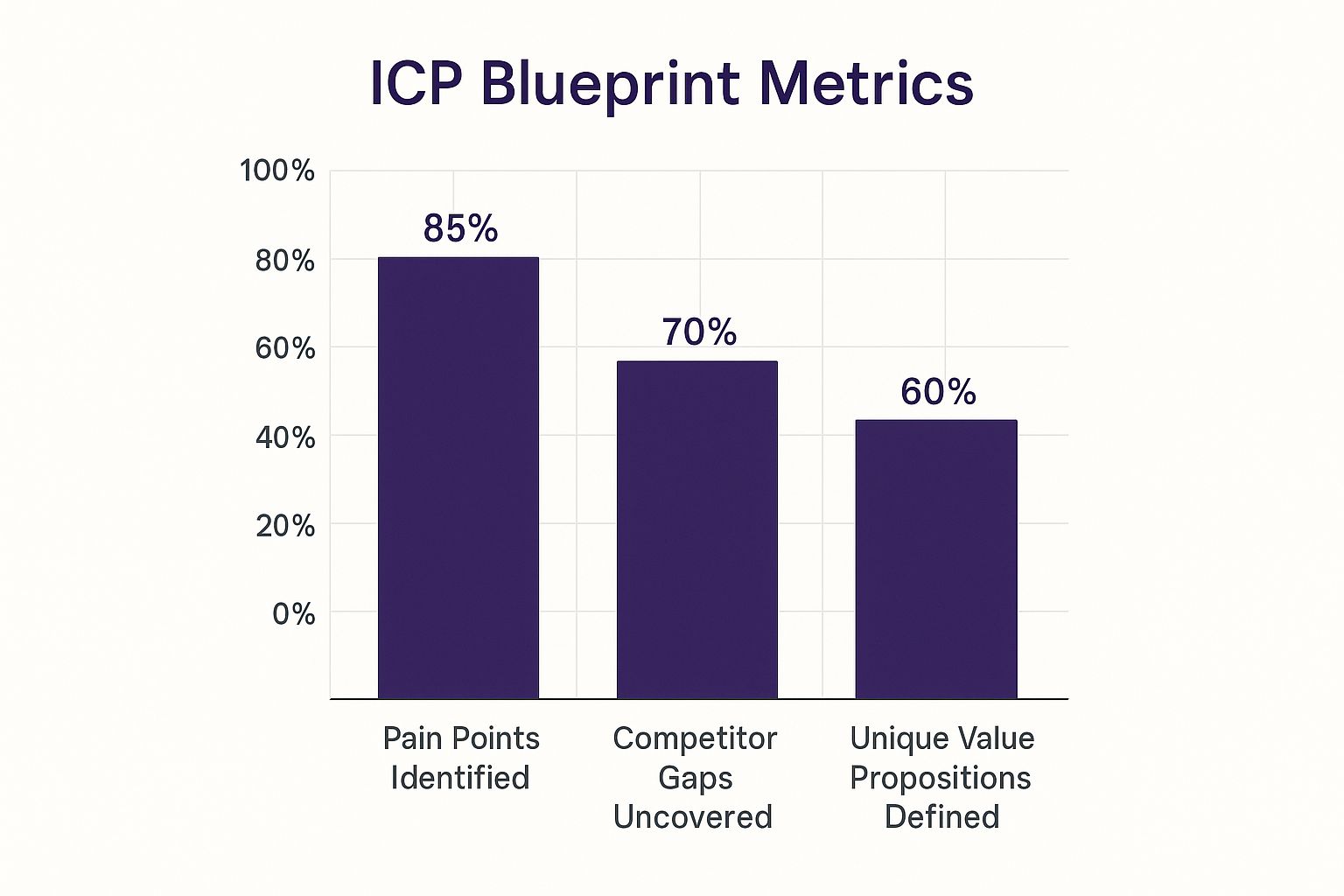
As you can see, figuring out client pain points and competitor gaps is relatively straightforward. The real challenge is defining your own value. Nailing this foundation isn't just a preliminary step—it's the strategic core that makes every single lead generation tactic you use more targeted, effective, and ultimately, more profitable.
Attract Clients with Inbound Marketing

Outbound marketing feels like shouting into a void. Inbound marketing is a conversation. Instead of chasing clients down, you build a system that draws them to you right when they’re searching for a solution.
This is how you prove your expertise before anyone even picks up the phone. When a potential client finds your article or guide through a Google search, you've already shifted the dynamic. You’re not a cold interruption; you’re the answer they were looking for.
Create Content That Solves Real Problems
The secret to inbound that actually works? Stop writing generic, vanilla blog posts. Start creating resources that solve the specific, painful problems your ideal clients are wrestling with.
Think about the questions that keep a marketing manager up at night. What organic traffic issues are they frantically searching for? Your goal is to create the single best resource on the internet that solves that exact problem. This isn't just content—it's your most effective sales tool, building trust and credibility on autopilot.
The data backs this up, big time. Content marketing is three times more efficient at generating leads than old-school outbound methods, with 72% of companies seeing a direct increase in leads because of it. It’s a numbers game, too. Businesses that get serious and publish at least 16 blog posts a month generate up to 4.5 times more leads. You can dig into more of these lead generation statistics to see the full picture.
Develop Irresistible Lead Magnets
A lead magnet is the bridge that turns a casual website visitor into a genuine lead. It's a high-value resource you offer for free in exchange for an email address. Let's be honest, "subscribe to our newsletter" just doesn't cut it anymore. Your offer has to be genuinely compelling.
Ask yourself: what tool, checklist, or piece of data would be so valuable that your ideal client would happily give you their email to get it? That’s how you build a pipeline of warm leads who have already raised their hand and shown interest.
Here are a few lead magnet ideas that consistently work for SEO agencies:
- Free SEO Audit Tool: An automated tool that gives a prospect a quick, actionable analysis of their website’s weak spots.
- Exclusive Case Studies: A behind-the-scenes look at how you drove massive results for a client in their specific industry.
- Actionable Checklists: A downloadable PDF like "The Ultimate Local SEO Checklist for 2024" that they can put to use immediately.
- Industry-Specific Research: An original report on SEO trends for a niche like e-commerce or SaaS that positions you as the expert.
A great lead magnet does more than just capture an email. It delivers a quick win and provides a taste of the value you offer, making prospects far more receptive when you eventually reach out.
Build Authority with Diverse Content Formats
If you’re only writing blog posts, you’re leaving leads on the table. Different people consume content in different ways, so a multi-format strategy is crucial to maximize your reach and connect with your entire audience.
This is also the smartest way to work. You can take one deep-dive research report and spin it into a webinar, an infographic, a video series, and a dozen social media posts. You’re getting maximum mileage from a single great idea.
To really get your inbound engine humming, you need a mix of content designed for different goals.
High-Impact Content Types for SEO Lead Generation
This table breaks down some of the most effective formats for attracting and converting high-quality SEO leads.
| Content Type | Primary Goal | Example Topic |
|---|---|---|
| In-Depth Blog Posts | Attract organic traffic and build topical authority. | "A Step-by-Step Guide to E-commerce Keyword Research" |
| Original Research/Reports | Generate backlinks and establish industry leadership. | "The 2024 State of B2B SaaS SEO" |
| Webinars/Workshops | Capture high-intent leads and engage prospects directly. | "Live Website Teardown: Fixing Common On-Page SEO Mistakes" |
| Case Studies | Build trust and prove the effectiveness of your services. | "How We Increased Organic Leads by 150% for a Local Law Firm" |
| Video Tutorials | Educate your audience and showcase practical expertise. | "How to Set Up a Google Business Profile for Maximum Visibility" |
By weaving these different formats together, you build a powerful system. Each piece of content works to attract, educate, and convert your ideal clients, creating a steady, predictable stream of leads who already see you as the expert they need.
Find New Clients with Proactive Outreach

While your inbound marketing machine is warming up, you can't just sit around and wait for leads to roll in. Proactive outreach puts you in the driver's seat, getting you in front of ideal clients right now.
This isn't about blasting a generic template to a thousand contacts—that's just spam. Smart outreach is all about precision, personalization, and giving real value before you ever ask for a thing.
Done right, outbound is the fastest way to land your first few clients and get some cash flow in the door. Think of it as manually starting the flywheel that your inbound content will eventually keep spinning on its own. The key is to stop thinking like a salesperson and start acting like a helpful expert.
Craft Cold Emails That Actually Get Opened
Forget everything you think you know about cold email. The goal isn't to close a deal in that first message. It's just to start a conversation. To do that, your email has to cut through the noise by being ridiculously personal and immediately useful.
Let’s say you’re targeting an e-commerce store. Instead of a generic pitch, what if you sent them a 90-second Loom video showing a critical technical SEO issue on their product pages? An issue that's probably costing them sales. Instantly, you've proven your expertise and given them a damn good reason to reply.
Here’s what really works:
- Deep Personalization: Reference something specific. A recent company achievement, a post they shared on LinkedIn, or a competitor they're clearly battling in the search results. Show you've done your homework.
- Value-First Offer: Give away a small, actionable insight for free. A quick site audit, a missed keyword opportunity, a broken backlink analysis—something that helps them right away.
- A Clear, Low-Friction Ask: Don't ask for a 30-minute demo. That’s a huge commitment. Instead, ask a simple question like, "Is improving organic traffic a priority for you right now?"
This approach flips the script. You go from being an interruption to being a source of welcome, expert advice. Your response rates will thank you for it.
Build Relationships on LinkedIn
LinkedIn is a goldmine for B2B leads, but most people use it completely wrong. Firing off a connection request with a sales pitch attached is the fastest way to get ignored. The real play is to use the platform to build genuine professional relationships over time.
Start by identifying the decision-makers at companies that fit your ideal client profile. Don't just connect and pitch. Follow them. Engage with their posts thoughtfully. Share your own insights about the SEO challenges their industry is facing.
LinkedIn outreach works best when it's treated like a networking event, not a sales floor. Your goal is to become a familiar, credible resource long before you ever mention your services.
When you finally do reach out, your message will be warm and contextual. You can reference a post they recently shared or a mutual connection, making it feel natural instead of cold. Remember, the audience on LinkedIn has twice the buying power of an average web audience. If you play the long game, you’ll find high-value clients.
Forge Powerful Strategic Partnerships
One of the most overlooked—and powerful—ways to get high-quality SEO leads is through referral partnerships. Ask yourself: who already works with my ideal clients but doesn't offer SEO?
Think about the ecosystem your clients live in. Web design firms, PPC agencies, branding specialists, and even business consultants are constantly talking to companies that need what you do. A referral from a trusted advisor like that is worth more than a hundred cold emails.
Here’s a simple game plan to build out your referral network:
- Identify Potential Partners: Make a list of 10-15 local or niche-specific agencies that serve your target market.
- Make a Personal Connection: Reach out to the founder or a key decision-maker. Offer to grab coffee or hop on a quick virtual chat to learn about their business, not to sell them on yours.
- Propose a Two-Way Street: Frame the partnership as a win-win. Offer a clear referral fee or a reciprocal deal where you send relevant leads their way.
- Make It Easy for Them: Give them a simple one-pager about your services and the exact type of client you help best. That way, they'll know exactly who to send to you.
These relationships take time to build, but a solid referral network can become your most consistent and profitable source of new business, delivering a steady stream of pre-qualified leads who are already eager to work with you.
Turn Your Website into a Lead Conversion Engine
Getting traffic to your agency website is step one. But traffic doesn’t pay the bills—conversions do. The real work begins when you turn those visitors into actual, qualified leads.
This is all about conversion rate optimization (CRO). Think of it as transforming your website from a static digital brochure into your most effective salesperson, one that works 24/7. Too many agencies get caught up in traffic metrics and then wonder why their inbox is silent. The fix? Guide every visitor toward a specific action and make it irresistible for them to take that next step.
Strategically Place Your Calls to Action
Your call-to-action (CTA) is the most important signpost on your site. It tells people exactly what to do next. Without clear, compelling CTAs, you’re leaving potential clients to wander off and inevitably click away.
Your CTAs need to be impossible to ignore and packed with action-oriented language. Ditch the generic "Contact Us" and get specific. Promise them something valuable.
- "Get My Free SEO Proposal"
- "Schedule a 15-Minute Strategy Call"
- "Download the E-commerce SEO Checklist"
These work because they offer a tangible outcome. A visitor knows exactly what they’ll get for their click. Sprinkle these buttons everywhere it makes sense—above the fold on your homepage, at the end of every blog post, and all over your service pages. You want to give them plenty of chances to convert.
Build High-Converting Service Pages
Your "Local SEO Services" page can't just be a wall of text. It needs to be a laser-focused sales pitch that speaks directly to a business owner struggling to get found online. This is where dedicated landing pages are a game-changer.
By 2025, an estimated 68% of B2B businesses will be using custom landing pages for lead capture. Why? Because they offer a focused experience that converts way better than a generic page. Your goal should be to build a specific page for each core service, tailored to the unique pain points of that client. You can find more data on how marketing statistics are shaping effective lead generation strategies.
Your service pages absolutely must be packed with social proof. Client testimonials, video case studies, and logos of companies you've worked with are non-negotiable. This stuff builds instant trust and answers the prospect's biggest question: "Can this agency actually deliver results?"
A killer service page needs a few key things:
- A sharp headline that hits on a specific pain point.
- A quick rundown of your process and what makes you different.
- Hard proof of your results (case studies, testimonials, logos).
- A big, obvious CTA that tells them what to do next.
Nurture Leads with Email Automation
Let's be real: most visitors aren't ready to sign a contract on their first visit. They’re usually just kicking tires or in the early research phase. This is where email nurturing becomes your secret weapon for generating a steady flow of SEO leads.
By offering a valuable lead magnet—like a free audit tool or an exclusive industry report—you can capture their email and earn permission to stay in touch. From there, an automated email sequence can work behind the scenes to build a relationship over time.
For example, you could set up a simple five-part email series:
- Email 1: Delivers the awesome lead magnet they asked for.
- Email 2: Shares a detailed case study that’s super relevant to their industry.
- Email 3: Offers a quick, actionable SEO tip they can use right away.
- Email 4: Tackles common objections or questions about investing in SEO.
- Email 5: Invites them to a no-pressure strategy call.
This approach keeps your agency top-of-mind without being salesy. When they are finally ready to pull the trigger on SEO, you'll be the first one they call. And the data backs this up—a solid 79% of B2B marketers say email is their most effective channel for generating demand.
Use Your Own SEO to Drive Maximum Leads
Nothing sells your SEO services better than your own search rankings. It’s the ultimate proof of concept.
When a potential client searches for an "SEO agency for law firms" and finds your website sitting at the top of the results, you've already won half the battle. This isn't just a lead generation tactic; it’s a powerful demonstration of your expertise.
Practicing what you preach builds immediate trust before a prospect even clicks through to your site. It completely flips the script—instead of you chasing them, they come to you because you’re the proven expert. This turns your website into an engine for high-quality, inbound leads who are already sold on your skills.
Target High-Intent Commercial Keywords
To make this work, you have to get inside the mind of your ideal customer. What are they typing into Google at the exact moment they’re ready to hire someone?
Generic keywords like "SEO services" are usually too broad and ridiculously competitive. The real gold is in the long-tail, high-intent keywords that signal an immediate need for a solution.
Instead of those vanity terms, focus on keywords that include a specific niche, location, or service. That’s how you attract clients who are a perfect fit for what you do.
- Niche-Specific: "B2B SaaS SEO agency," "e-commerce SEO consultant," "SEO for dentists."
- Location-Based: "local SEO services in Austin," "New York SEO company."
- Service-Focused: "technical SEO audit services," "link building for startups."
When you rank for these targeted terms, you ensure the traffic hitting your site isn't just random visitors, but qualified prospects actively looking for exactly what you offer.
Build an Authoritative Backlink Profile
Ranking for competitive keywords takes more than great on-page SEO. You need a strong backlink profile to signal your authority and credibility to search engines. For an SEO agency, your backlink profile does double duty: it boosts your rankings and acts as a public portfolio of your industry connections.
But the game has changed. It's not about the sheer quantity of links; it's about their quality and relevance. A single, powerful link from a respected industry publication is worth more than a hundred low-quality directory links.
A strong backlink profile is like a collection of endorsements from other respected players in your field. Each quality link tells both Google and potential clients that you are a trusted, authoritative voice in the industry.
Here are a few white-hat strategies that actually work:
- Guest Blogging: Write for well-known marketing or industry-specific blogs where you can share genuine expertise.
- Podcast Appearances: Get on relevant podcasts to share insights and earn a link from the show notes.
- Creating Original Research: Develop unique data or reports that others in the industry will want to cite and link back to.
Globally, SEO is a beast for lead generation. Research shows 35% of B2B marketers say their best leads come straight from SEO. That makes sense, considering Google commands 71.98% of the search market. But here's the catch: a staggering 91% of pages get zero organic traffic because they lack backlinks. A focused link-building effort is non-negotiable. You can dig into more of these crucial B2B SEO statistics to see the full picture.
Dominate the Local Pack with Google Business Profile
If you’re targeting local businesses, optimizing your Google Business Profile (GBP) is everything. For searches with local intent, like "SEO agency near me," the local map pack is the most valuable real estate on the page.
A fully dialed-in GBP can easily become your single biggest source of local leads. Don't just set it and forget it—treat it like a dynamic part of your online presence.
- Fill Out Everything: Complete every single section of your profile with detailed, keyword-rich information. No cutting corners.
- Gather Reviews Consistently: Actively encourage your happy clients to leave detailed reviews. A steady stream of positive feedback is a massive ranking factor and a huge trust signal.
- Use Google Posts Weekly: Keep your profile active by sharing updates, case studies, and blog posts.
- Upload High-Quality Photos: Show off your team, your office, and your brand to give your profile a human touch.
When you own your local search presence, you demonstrate your expertise in the most tangible way possible. A local business owner who sees you dominating the map pack won’t need much more convincing that you can do the same for them.
A Few Common Questions About Generating SEO Leads
Getting into the nitty-gritty of SEO lead generation always brings up a few key questions. It's a world where everyone's looking for a predictable way to fill their pipeline, but the path isn't always clear.
Let's tackle some of the most common hurdles agencies and consultants face when trying to land more (and better) clients.
What’s the Single Best Way to Get High-Quality SEO Leads?
If I had to pick one, it would be a combination of your own SEO and content marketing. There’s simply no better sales pitch than ranking for the exact commercial keywords your ideal clients are typing into Google. It's the ultimate proof in the pudding.
The data backs this up, too. A solid 35% of B2B marketers report that SEO brings in their highest-quality leads. It's a direct line to prospects who are actively looking for a solution and are much closer to making a decision.
But here's the thing: putting all your faith in one channel is a recipe for disaster. The smartest agencies I know don't rely on a single source.
A truly resilient business is built on a mix of channels. You need the long-term pull of your own SEO (inbound), the proactive push of personalized outreach (outbound), and the network effect of strong partnerships (referrals). That’s how you build a stable, scalable lead gen machine.
How Long Until My Inbound Marketing Starts Generating Leads?
Inbound is a long game, no doubt about it. You need to be patient. Realistically, you’re looking at 3 to 6 months before you start seeing a consistent trickle of organic traffic and your first few qualified leads roll in.
Of course, that timeline isn't set in stone. A few things can speed it up or slow it down:
- Your Website's Authority: A site with some history will get traction faster than a brand-new domain.
- Keyword Competition: If you're targeting hyper-competitive terms, you're in for a longer fight.
- Content Consistency: The more high-value content you publish on a regular schedule, the quicker Google takes notice.
While the ramp-up feels slow compared to a quick outbound campaign, the payoff is huge. Inbound leads cost far less over time because they found you—they already see you as an expert.
Should a New Agency Focus on Inbound or Outbound First?
The answer is both. But you have to be smart about it. Think of it as a two-pronged attack plan for sustainable growth.
From the day you launch, start laying the foundation for your long-term inbound engine. Get your own website's SEO in order and start creating that foundational content that will pay dividends for years. This is your future pipeline.
At the same time, you need cash flow now. That’s where targeted outbound comes in. You should be running focused outreach campaigns—like value-driven cold emails or personalized LinkedIn messages—to land those first few clients. This gets revenue in the door so you can keep the lights on and reinvest in your inbound efforts.
Your early outbound wins provide the fuel, while the inbound foundation you're building ensures you won't have to hustle for every single client forever. Eventually, the goal is for inbound to take over as your primary, almost automated, source of new business.
At Frozen Crow Inc., we help businesses build and execute marketing strategies that drive real growth. If you're ready to turn your website into a powerful lead generation engine, we offer a free marketing audit to identify your biggest opportunities. Get your custom plan today at https://frozencrow.com.


