


October 12, 2026
10 Customer Retention Marketing Strategies for 2025
In the relentless pursuit of new customers, businesses often overlook their most valuable asset: the ones they've already won. Acquiring a new customer can cost five times more than retaining an existing one, a figure that underscores a fundamental principle of sustainable growth. Effective customer retention marketing strategies are the bedrock of long-term profitability, transforming one-time buyers into loyal advocates for your brand.
These strategies do more than just reduce churn; they actively build deeper relationships, significantly increase customer lifetime value (LTV), and create a predictable revenue stream that fuels expansion. A focus on retention isn't about abandoning acquisition, but about creating a balanced growth model. For a deeper dive into this concept, you can explore various strategies to improve customer retention and build a more resilient business. This approach is critical for turning your existing customer base into your most powerful growth engine.
This article moves beyond generic advice to provide a comprehensive roundup of 10 proven strategies you can implement immediately. We will cover everything from loyalty programs and personalized email marketing to predictive analytics and win-back campaigns. Each section offers actionable steps, real-world examples, and the specific insights you need to build an unbreakable bond with your customers and secure your company’s future. Let's explore the methods that will keep your customers coming back.
1. Loyalty Programs and Rewards
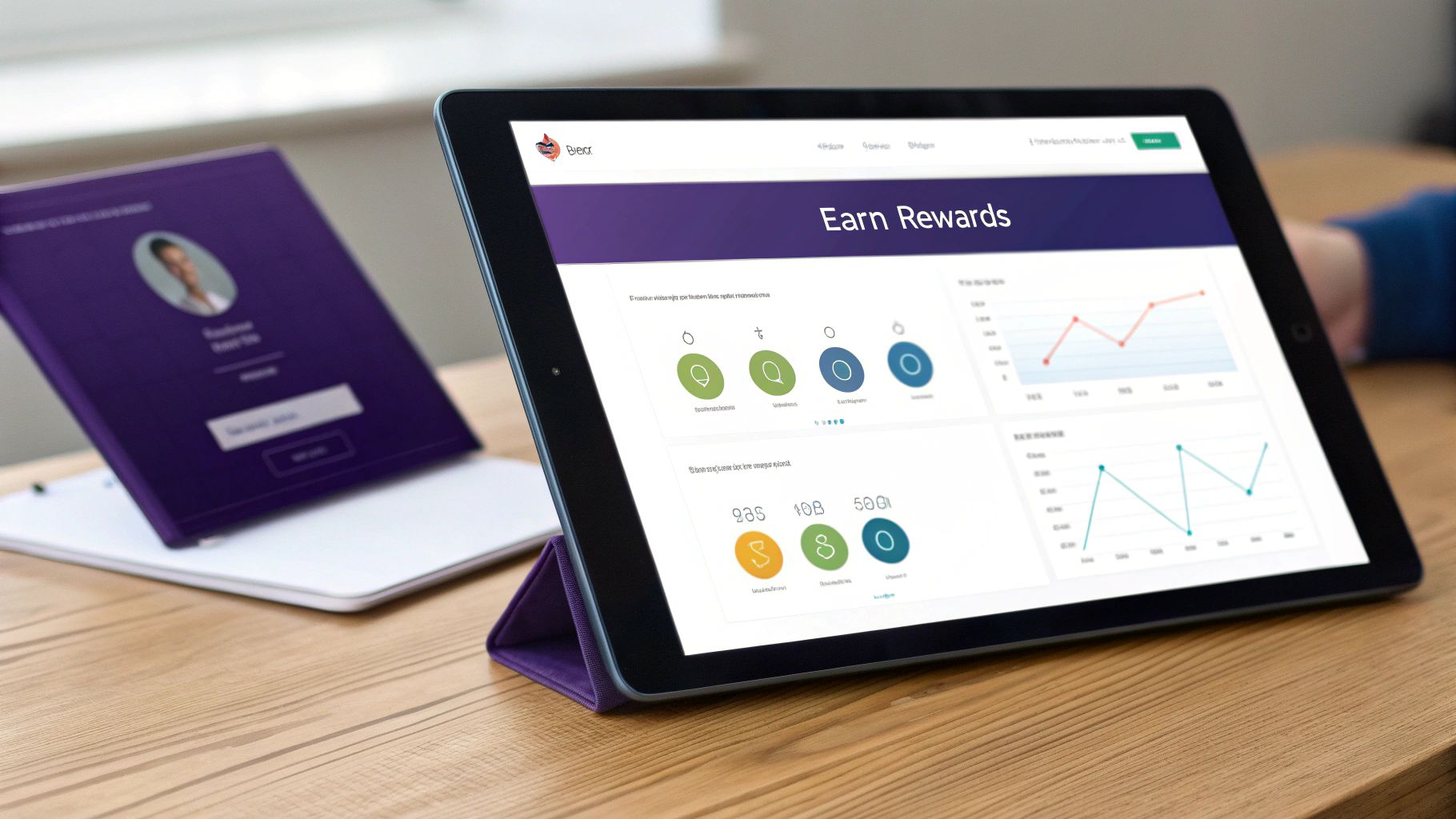
Loyalty programs are a cornerstone of effective customer retention marketing strategies, designed to reward repeat business and foster a deeper connection with your brand. This structured approach incentivizes customers to choose you over competitors by offering tangible value, such as points, discounts, or exclusive access, in exchange for their continued engagement. The core principle is simple: make customers feel appreciated and they will stick around.
A well-designed program not only encourages repeat purchases but also transforms satisfied customers into passionate brand advocates. It provides a direct channel for communication and a wealth of data on customer behavior, which can be used to further personalize the shopping experience.
How to Implement a Loyalty Program
Implementing a successful loyalty program involves more than just offering discounts. It requires a strategic approach that aligns with both your business goals and your customers' desires.
- Choose the Right Structure: Start with a simple, easy-to-understand model. A points-based system (e.g., 1 point per dollar spent) is straightforward and effective. For service or subscription businesses, a tiered system like Sephora’s Beauty Insider can create aspiration by offering greater rewards as customers spend more.
- Offer Valuable Rewards: Ensure the rewards are genuinely desirable to your target audience. This could range from discounts on future purchases to exclusive products, early access to sales, or experiential rewards. Analyze purchase data to see what your best customers buy most often.
- Promote and Simplify Enrollment: Make it incredibly easy for customers to join, ideally during the checkout process with a single click. Promote the program across all channels, including email, social media, and in-store signage, clearly highlighting the benefits.
- Analyze and Personalize: Use the data collected from your program to understand purchasing habits. This allows you to send personalized offers and communications, making customers feel seen and valued, which is a key driver of retention.
2. Personalized Email Marketing
Personalized email marketing is a targeted communication strategy that moves beyond generic, one-size-fits-all messages. It leverages customer data, behavior, and preferences to deliver highly relevant content that speaks directly to the individual's needs and interests. This approach is a powerful tool in your customer retention marketing strategies because it makes customers feel understood and valued, fostering a stronger, more personal connection to your brand.
By tailoring content, you transform the inbox from a broadcast channel into a one-to-one conversation. This relevance not only boosts engagement rates but also reinforces the value you provide, encouraging customers to stay loyal. Great examples include Netflix’s content recommendations or Spotify’s annual "Wrapped" campaign, which use personal data to create a compelling, individualized experience.
How to Implement Personalized Email Marketing
Successfully implementing personalization requires a systematic approach to data and a commitment to understanding your customers on a deeper level. It is about sending the right message to the right person at the right time.
- Collect and Organize Customer Data: Systematically gather data at every touchpoint, such as purchase history, browsing behavior, location, and stated preferences. Use a CRM or marketing platform to keep this information organized and accessible for segmentation.
- Start with Smart Segmentation: Before diving into deep personalization, begin by segmenting your audience into logical groups. You can segment by purchase frequency (e.g., loyal customers vs. at-risk customers), product categories of interest, or demographic information.
- Use Automation to Scale: Manually personalizing every email is impossible. Employ marketing automation tools to trigger emails based on specific customer actions, such as abandoned cart reminders, post-purchase follow-ups, or birthday greetings. Learn more about how marketing automation can enhance your personalization efforts and see how marketing automation for small business on frozencrow.com can be a game-changer.
- Test and Optimize: Continuously test different personalization elements to see what resonates most with your audience. Experiment with personalized subject lines, product recommendations, and calls-to-action to optimize performance and drive higher retention.
3. Customer Experience Optimization
Customer Experience (CX) Optimization is a comprehensive strategy focused on improving every touchpoint a customer has with your brand throughout their entire journey. This approach goes beyond simple customer service, aiming to create seamless, enjoyable, and memorable interactions that consistently exceed expectations. A superior customer experience is one of the most powerful customer retention marketing strategies because it builds deep-seated emotional loyalty and makes price a secondary consideration.
By meticulously refining each stage of the customer lifecycle, from initial awareness to post-purchase support, businesses can foster genuine brand affinity. Companies that excel at CX, like Apple with its integrated ecosystem or Zappos with its legendary service, understand that how a customer feels about their interactions is as important as the product itself.
How to Implement Customer Experience Optimization
Optimizing the customer experience requires a holistic and customer-centric mindset, ingrained in every department of your organization. It's about proactively identifying and eliminating friction.
- Map the Customer Journey: Start by creating a detailed map of every interaction a customer has with your brand, from discovering you on social media to contacting support. This visual representation helps pinpoint specific pain points and moments of friction that need improvement.
- Actively Collect Feedback: Don't guess what your customers want. Implement systems to gather feedback at key touchpoints using tools like Net Promoter Score (NPS) or Customer Satisfaction (CSAT) surveys. Use this data to drive meaningful changes.
- Empower Your Employees: A great customer experience is delivered by happy, empowered employees. Invest in thorough training to ensure your team has the knowledge, tools, and authority to resolve customer issues effectively and deliver a consistent brand experience.
- Leverage Technology to Reduce Friction: Use technology to make interactions easier and more efficient. This could mean implementing a chatbot for instant answers, offering self-service portals, or ensuring your website provides a flawless mobile experience. The goal is to make doing business with you effortless.
4. Customer Success Programs
Customer success programs represent a proactive shift from reactive customer service, focusing on helping customers achieve their desired outcomes while using your product or service. This strategy is built on the premise that a customer’s success is your success. By anticipating needs and ensuring they derive maximum value from their purchase, you build a foundation for long-term loyalty and significantly reduce churn.
This approach is particularly crucial for SaaS, B2B, and subscription-based businesses where ongoing value is the key to retention. It transforms the customer relationship from a transactional one into a strategic partnership, fostering higher satisfaction and turning users into advocates.

How to Implement a Customer Success Program
Building an effective customer success program requires a deep understanding of your customer's goals and a commitment to helping them reach those goals with your product.
- Define Success Metrics: Work with customers to understand what success looks like for them. Define clear, measurable key performance indicators (KPIs) that align their goals with your product's capabilities. For example, a marketing automation platform's success metric might be a 15% increase in lead generation for a client.
- Create a Comprehensive Onboarding Process: The journey starts with a robust onboarding experience. Guide new customers through setup and initial use, ensuring they experience an "early win" to see value quickly. HubSpot excels at this with its extensive library of training resources and guided setup.
- Implement Proactive Check-ins: Don't wait for customers to report problems. Schedule regular check-ins to review their progress, offer strategic advice, and introduce new features relevant to their goals. Slack does this by monitoring team usage and providing optimization tips to improve collaboration.
- Use Technology to Scale: Employ customer success software like Gainsight to track customer health, manage interactions, and identify at-risk accounts. These platforms provide a centralized view of customer data, enabling your team to act on insights efficiently.
5. Retargeting and Remarketing Campaigns
Retargeting and remarketing campaigns are powerful customer retention marketing strategies that re-engage users who have previously interacted with your brand but did not convert. This digital advertising approach uses tracking pixels and cookies to serve tailored ads to these individuals across other websites and social media platforms. The goal is to keep your brand top-of-mind, gently nudge customers back to your site, and encourage them to complete their purchase or desired action.
By reminding past visitors of the products they viewed or the items they left in their cart, you can effectively bridge the gap between initial interest and final conversion. This strategy is highly efficient because it targets a warm audience that has already demonstrated an interest in what you offer, making them more likely to respond positively than cold prospects.
How to Implement Retargeting and Remarketing Campaigns
Executing a successful retargeting campaign requires careful segmentation and compelling creative to avoid being intrusive while maximizing impact.
- Segment Your Audience: Don't treat all past visitors the same. Create distinct audience segments based on behavior, such as users who viewed a specific product, those who abandoned a cart, or previous customers you want to upsell. Platforms like Google Ads and Facebook Ads make this easy.
- Create Compelling Ad Creative: Your ads should directly address the user's previous action. For an abandoned cart, an ad might feature the exact product left behind and include a small discount as an incentive. For a user who browsed a category, show them your best-selling items from that collection.
- Set Appropriate Frequency Caps: One of the biggest risks of retargeting is ad fatigue or annoyance. Set a frequency cap to limit the number of times a single user sees your ad within a specific period. This prevents your brand from appearing spammy and respects the user's online experience.
- Test and Optimize: Continuously test different ad copy, visuals, offers, and calls-to-action for each audience segment. Use A/B testing to identify what resonates most effectively and refine your campaigns based on performance data to improve your return on ad spend.
6. Community Building and Social Engagement
Community building is one of the most powerful customer retention marketing strategies available, transforming transactional relationships into a sense of genuine belonging. This approach involves creating and nurturing spaces, both online and offline, where customers can connect with your brand and, more importantly, with each other. It shifts the focus from selling products to fostering shared interests and creating value beyond the purchase.
When customers feel like part of an exclusive group, their loyalty deepens significantly. This sense of community turns passive buyers into active participants and brand evangelists. It also provides a direct line for authentic feedback and a platform to showcase user-generated content, strengthening social proof and attracting new customers.
How to Implement Community Building
Building a thriving community requires a commitment to providing genuine value and facilitating meaningful connections, not just pushing promotional messages. The goal is to create an environment where your customers want to spend their time.
- Choose the Right Platform: Go where your audience already is. This could be a dedicated Facebook Group, a Slack or Discord channel, a subreddit, or a forum on your own website like the Sephora Beauty Insider Community. The platform should fit your brand's voice and your customers' communication preferences.
- Provide Value, Not Just Sales Pitches: Share exclusive content, expert tips, behind-the-scenes looks, and host Q&A sessions with team members. The LEGO Ideas platform, for example, gives fans a direct role in product creation, offering immense value and engagement.
- Encourage and Showcase User-Generated Content (UGC): Actively ask customers to share their experiences, photos, or tips related to your product. Feature this content prominently on your social media, website, or within the community itself. This validates their contribution and provides powerful social proof.
- Engage Promptly and Authentically: Be an active participant in your community. Respond to questions, celebrate member successes, and facilitate discussions. Your presence shows that you are listening and care about what your customers have to say. For deeper insights into this topic, you can explore brand development strategies on frozencrow.com.
7. Value-Added Services and Content
Value-added services and content are powerful customer retention marketing strategies that enrich the customer experience by providing benefits beyond your core product. This approach involves offering educational resources, tools, or supplementary services that help customers achieve their goals, thereby increasing the perceived value of your brand and fostering a deeper, more helpful relationship. The principle is to become an indispensable resource, not just a vendor.
A well-executed value-add strategy positions your brand as an industry authority and a genuine partner in your customer's success. It creates additional touchpoints for engagement, differentiates you from competitors who only sell a product, and builds a community around shared knowledge and problem-solving.
How to Implement Value-Added Services and Content
Successfully implementing value-added content requires a deep understanding of your customer's needs and challenges beyond their immediate transaction with you. It is about supporting their broader objectives.
- Align with Customer Goals: Identify what your customers are trying to achieve with your product. For example, HubSpot provides extensive free marketing and sales certifications, which helps their software users become more effective professionals, tying their career growth to the HubSpot brand.
- Create Practical, Problem-Solving Content: Develop resources that address common customer questions and pain points. Home Depot's free in-store workshops and online DIY project guides don't just sell tools; they empower customers to successfully complete their projects, building confidence and loyalty.
- Leverage Customer Feedback for Ideas: Use surveys, support tickets, and direct conversations to discover what additional services or information your audience would find most valuable. This ensures your efforts are relevant and appreciated, preventing wasted resources on unwanted extras.
- Maintain Quality and Consistency: Your value-added offerings must reflect the same quality standards as your primary products. Whether it’s a detailed whitepaper, a training webinar, or a support forum, a polished and professional execution reinforces your brand's credibility.
8. Subscription and Membership Models
Subscription and membership models fundamentally shift the customer relationship from one-time transactions to an ongoing, committed partnership. By offering continuous access to products, services, or exclusive benefits for a recurring fee, businesses can foster profound loyalty and secure a predictable revenue stream. This approach is one of the most powerful customer retention marketing strategies because it bakes retention directly into the business model.
Instead of constantly persuading customers to make another purchase, the focus moves to consistently delivering value to justify the recurring payment. This model transforms customers into members of a community, creating a durable bond that is difficult for competitors to break. Success stories like Dollar Shave Club and Adobe Creative Cloud prove that a well-executed subscription can redefine an industry.
How to Implement a Subscription Model
Launching a successful subscription or membership program requires a strategic focus on long-term value delivery and customer experience. It’s about building a relationship, not just a recurring transaction.
- Offer Flexible Tiers: Cater to different needs and budgets by providing multiple subscription options. A basic tier can offer core value, while premium tiers can add exclusive features or higher usage limits. This allows customers to choose the plan that best fits them, increasing initial adoption and providing upsell opportunities.
- Focus on Strong Onboarding: The first few weeks are critical. Create a structured onboarding process that clearly demonstrates the value of the subscription. Use tutorials, welcome emails, and personalized tips to help new members get the most out of their subscription immediately, reinforcing their decision to join.
- Provide Easy Self-Service Management: Customers need to feel in control of their commitment. Offer a user-friendly online portal where they can easily pause, upgrade, downgrade, or cancel their subscription without friction. This transparency builds trust and reduces churn caused by frustration.
- Continuously Add Value: To justify ongoing payments, you must continuously innovate and enhance your offering. Regularly add new features, exclusive content, or improved products. Communicate these updates to your members to remind them of the evolving value they receive.
9. Win-Back Campaigns for Churned Customers
Win-back campaigns are one of the most direct customer retention marketing strategies, specifically targeting customers who have stopped engaging with your brand. These focused efforts aim to reactivate lapsed or "churned" customers by reminding them of your value and providing a compelling reason to return. By addressing past issues or simply offering an attractive incentive, you can reignite relationships that once existed.
These campaigns are powerful because they target an audience that is already familiar with your products or services. This pre-existing awareness means you don't have to start from scratch; instead, you can leverage past purchase history and engagement data to create highly personalized and effective messages. A successful win-back campaign can recover lost revenue and prevent those customers from permanently switching to a competitor.
How to Implement a Win-Back Campaign
Executing a successful win-back campaign requires a blend of strategic timing, segmentation, and compelling messaging. It’s about more than just sending a generic "we miss you" email.
- Segment Your Churned Customers: Not all lapsed customers are the same. Group them based on their past value, purchase frequency, or potential reasons for leaving. A high-value customer who churned recently may warrant a more generous offer than a low-frequency buyer who left a year ago.
- Time Your Outreach Strategically: Avoid contacting customers immediately after they churn. A "cool-down" period of 30-90 days is often effective, giving them space before you attempt re-engagement. For subscription models, timing might coincide with the end of a billing cycle or a major product update.
- Craft a Compelling, Personalized Offer: Your message should acknowledge their absence and provide a clear incentive to return. Companies like Grubhub often send "We miss you" emails with a significant discount on the next order. Test different offers like percentage discounts, free shipping, or a free gift to see what resonates.
- Address the "Why": If you know why a segment of customers left, address it. For instance, if feedback indicated high prices, your win-back offer could highlight a special discount or a new, more affordable product line. This shows you listen and have evolved.
- Know When to Let Go: Set a clear timeline for your campaign, such as a three-email sequence over several weeks. If a customer doesn't re-engage after your best efforts, it's often more cost-effective to remove them from your active list and focus on other retention opportunities. For more insights on re-engaging customers who have shown intent to leave, explore how to reduce cart abandonment on frozencrow.com.
10. Predictive Analytics and Churn Prevention
Predictive analytics is a powerful, data-driven customer retention marketing strategy that forecasts which customers are likely to churn, or stop using your service, before they actually do. By leveraging historical data, machine learning, and statistical algorithms, businesses can proactively identify at-risk individuals. This foresight allows for timely, targeted interventions designed to re-engage customers and prevent them from leaving.
This approach shifts retention efforts from reactive to proactive, enabling you to address potential issues before they escalate into lost revenue. For instance, a SaaS platform might notice a drop in a user's login frequency, or a telecom company might see reduced data usage, both of which can be early indicators of churn. Central to any retention effort are proven strategies to reduce churn and cultivate loyalty, ensuring long-term business growth.
How to Implement Predictive Analytics for Churn Prevention
Implementing this strategy requires a methodical approach to data collection and analysis, turning raw numbers into actionable retention plans. It is one of the most sophisticated customer retention marketing strategies available today.
- Gather Relevant Data: Start by consolidating high-quality data from multiple sources. This includes transaction history, product usage patterns (like feature adoption in an app), customer service interactions, and demographic information. The richer the dataset, the more accurate your predictions will be.
- Develop a Predictive Model: Begin with a simple model. You can analyze key churn indicators like a decline in purchase frequency or a recent string of support tickets. As you mature, you can employ machine learning algorithms to identify more complex, non-obvious patterns that precede churn.
- Create Targeted Interventions: Once an at-risk customer is identified, act swiftly. The intervention should be personalized. It could be a special discount, a call from a customer success manager to offer assistance, or an email highlighting new features relevant to their past usage.
- Test and Refine: Continuously test different intervention strategies to see which ones are most effective at retaining specific customer segments. Regularly validate and update your predictive models to ensure they remain accurate as customer behaviors and market conditions evolve.
Customer Retention Strategies Comparison
| Strategy | Implementation Complexity 🔄 | Resource Requirements ⚡ | Expected Outcomes 📊 | Ideal Use Cases 💡 | Key Advantages ⭐ |
|---|---|---|---|---|---|
| Loyalty Programs and Rewards | High – complex rules, tech infrastructure | Significant – technology, maintenance | Increased customer lifetime value, repeat purchases | Brands aiming to build long-term customer loyalty | Drives repeat business; generates valuable data |
| Personalized Email Marketing | Medium – requires data integration | Moderate – data management and content creation | Higher engagement and ROI from targeted communication | Businesses with rich customer data and CRM systems | Higher open rates; measurable results |
| Customer Experience Optimization | High – organizational change, tech investment | High – cross-functional teams and training | Improved satisfaction, reduced churn, brand differentiation | Companies focusing on end-to-end journey improvements | Boosts loyalty and brand differentiation |
| Customer Success Programs | Medium to High – dedicated teams required | Moderate to High – team and analytics | Reduced churn, increased lifetime value, upselling | SaaS and service-based businesses | Proactive retention; strengthens relationships |
| Retargeting and Remarketing | Medium – ad platform setup and optimization | Moderate – ongoing campaign management | Higher conversion rates, better brand recall | E-commerce and digital businesses | Cost-effective re-engagement; measurable ROI |
| Community Building and Social Engagement | Medium to High – ongoing engagement needed | Moderate – management and content creation | Strong brand loyalty, user-generated content | Brands focusing on emotional connection and advocacy | Builds authentic relationships; referral generation |
| Value-Added Services and Content | Medium – continuous content and service delivery | Moderate to High – content creation resources | Increased perceived value and customer engagement | Brands wanting to educate and engage customers | Differentiates brand; justifies premium pricing |
| Subscription and Membership Models | High – complex billing and service delivery | High – payment systems and continuous value delivery | Predictable revenue, increased lifetime value | Companies with recurring revenue models | Creates steady income; builds switching costs |
| Win-Back Campaigns for Churned Customers | Medium – automated triggers and personalization | Moderate – campaign management | Reactivation of dormant customers; increased revenue | Companies with churn issues | Lower acquisition costs; higher conversion rates |
| Predictive Analytics and Churn Prevention | High – advanced analytics and data expertise | High – data infrastructure and modeling | Proactive churn prevention and resource optimization | Data-driven companies focusing on retention | Scales retention efforts; provides churn insights |
From Strategy to Loyalty: Building Your Retention Flywheel
Navigating the landscape of modern commerce requires a fundamental shift in focus: from the high-cost, high-effort sprint of customer acquisition to the marathon of building lasting loyalty. We have journeyed through a comprehensive suite of powerful customer retention marketing strategies, each one a vital component in constructing a business that thrives not just on new sales, but on enduring relationships. The journey from a first-time buyer to a lifelong advocate is paved with intentional, value-driven interactions.
The strategies we’ve detailed, from structured Loyalty Programs and hyper-personalized Email Marketing to proactive Customer Success Programs and insightful Predictive Analytics, are not isolated tactics. Instead, they are interlocking gears in a powerful "retention flywheel." When one strategy, like community building, is implemented effectively, it naturally feeds the success of others, such as gathering feedback for customer experience optimization or identifying candidates for a subscription model.
Key Takeaways for Immediate Action
The core message is one of integration and customer-centricity. Your goal is to make your customers feel seen, heard, and valued at every stage of their journey. Remember that retention is not a passive outcome; it's the direct result of a proactive, data-informed, and empathetic approach.
A few central principles to carry forward are:
- Personalization is paramount: Generic, one-size-fits-all communication no longer suffices. Leverage customer data to tailor offers, messages, and experiences.
- Value transcends transactions: Your relationship with a customer shouldn't end at the point of sale. Provide ongoing value through exclusive content, exceptional support, and a sense of community.
- Data is your guide: Don't guess what your customers want. Use analytics, surveys, and feedback to understand their behaviors, predict their needs, and identify churn risks before they escalate.
Your Next Steps: From Knowledge to Implementation
The sheer number of options can feel overwhelming, but progress begins with a single, well-executed step. Don't attempt to build your entire retention machine overnight. Instead, adopt a methodical approach.
- Assess and Prioritize: Review the ten strategies and identify one or two that align most directly with your current business goals and available resources. Is your primary challenge reactivating dormant users? A win-back campaign is your starting point. Do you have a highly engaged user base? A community-building initiative or a membership model might be the perfect next step.
- Start Small and Test: Implement your chosen strategy on a smaller, controlled scale. This allows you to measure its impact, gather data, and refine your approach without committing significant resources. A/B testing email subject lines, trying different loyalty rewards, or segmenting a small group for a new retargeting ad are all excellent starting points.
- Measure, Learn, and Scale: Once you have a proven concept, you can confidently scale it across your entire customer base. Continuously monitor your key performance indicators, such as customer lifetime value (CLV), churn rate, and repeat purchase rate, to ensure your efforts are delivering a positive return on investment.
For a broader perspective on successful approaches, delve into this list of 10 powerful customer retention marketing strategies to gather even more ideas and reinforce the concepts we've discussed here.
Ultimately, mastering customer retention marketing strategies is about building a more resilient, predictable, and profitable business. It's the engine that powers sustainable growth, transforming one-time buyers into a loyal community of brand evangelists who not only stay but also bring others with them. The investment you make in keeping your existing customers is one of the most powerful business decisions you can make.
Ready to transform these strategies from concepts on a page into measurable results for your business? The technical experts at Frozen Crow Inc. specialize in implementing the data-driven systems and automated campaigns required for world-class customer retention. Let us help you build the loyalty flywheel that powers your growth by visiting Frozen Crow Inc. to schedule a consultation.


